Updated on:
The Route des Vins d’Alsace — France’s oldest wine route — winds for 100 miles through some of the country’s most photogenic scenery: vine-striped hillsides, colorful medieval villages with half-timbered houses straight out of a storybook, ruined castles on ridgelines, and cellars pouring some of the best whites in France. Whether you have three days or five, the Alsace wine country delivers.
I’ve spent time exploring this region and built out two itinerary options depending on how long you have. The route passes through towns I loved — Colmar, Riquewihr, Ribeauvillé, Eguisheim — plus a few additions for the longer version. Both itineraries focus on the heart of the wine route, roughly between Colmar and Strasbourg, where the villages are densest and most beautiful.
Jump To:
- How to Use This Guide
- Alsace Wine Basics
- 3-Day Alsace Wine Route Itinerary
- 5-Day Alsace Wine Route Itinerary
- Where to Stay
- Getting There
- Alsace Wine Route Map
Disclaimer: This article contains some links where I earn commission through booking. There is no extra cost to you, and I only recommend things I’ve used and love or places I’ve stayed and enjoyed!
How to Use This Guide
Both itineraries are designed with Colmar as the primary base — it’s the most central town on the wine route and the most beautiful place to spend your evenings. The 5-day version finishes with two nights in Strasbourg. A car is highly recommended for exploring the smaller villages at your own pace; it also lets you stop at roadside cellar signs whenever the mood strikes. If you prefer not to drive, Ubers from Colmar to the smaller villages run around €25–30 and are reliable.
Each day includes a suggested base, how to get there, where to stay, and how to spend the day. Tastings, wandering, and long lunches are built into the pace — as much as I normally love a fast paced itinerary, this is a trip to slow down on.
Alsace Wine Basics
Alsace produces almost exclusively white wines (and a small amount of Pinot Noir), labeled by grape variety rather than by appellation — which makes them easier to navigate than most French wine regions. The seven AOC “noble varieties” are:
- Riesling — the prestige grape of Alsace; dry, mineral, and complex
- Gewurztraminer — aromatic, spicy, and floral; pairs perfectly with Alsatian food
- Pinot Gris — rich and full-bodied; great with choucroute and pork dishes
- Muscat — light and intensely aromatic; usually served as an aperitif
- Pinot Blanc — lighter, approachable, and great value
- Sylvaner — crisp and fresh; great with seafood
- Pinot Noir — the only red; lighter in style, often served slightly chilled
Look for the Crémant d’Alsace label too — Alsace’s sparkling wine made by the traditional method is excellent and great value compared to Champagne.
3-Day Alsace Wine Route Itinerary
Base: Colmar (3 nights)
Day 1: Arrive in Colmar
Getting There
Fly into Strasbourg (SXB) or Basel EuroAirport (BSL/MLH) — both are about 45–60 minutes from Colmar. Take the train from either airport to Colmar centre (direct from Strasbourg, change at Mulhouse from Basel).
Where to Stay
Le Colombier — right in the heart of Little Venice, this is the best-located hotel in Colmar’s Old Town. Breakfast, bar, and a lovely patio. Worth it for the location alone.
How to Spend Day 1
Afternoon
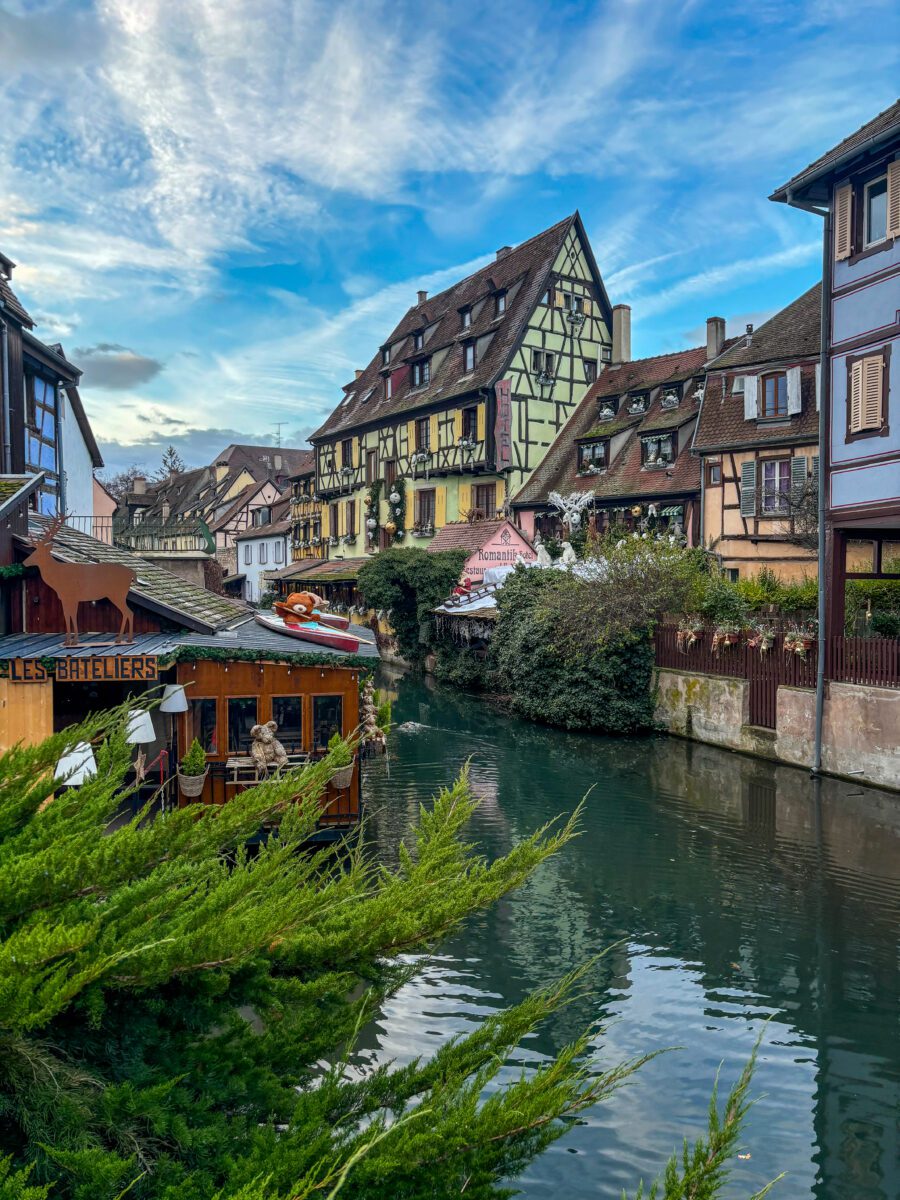
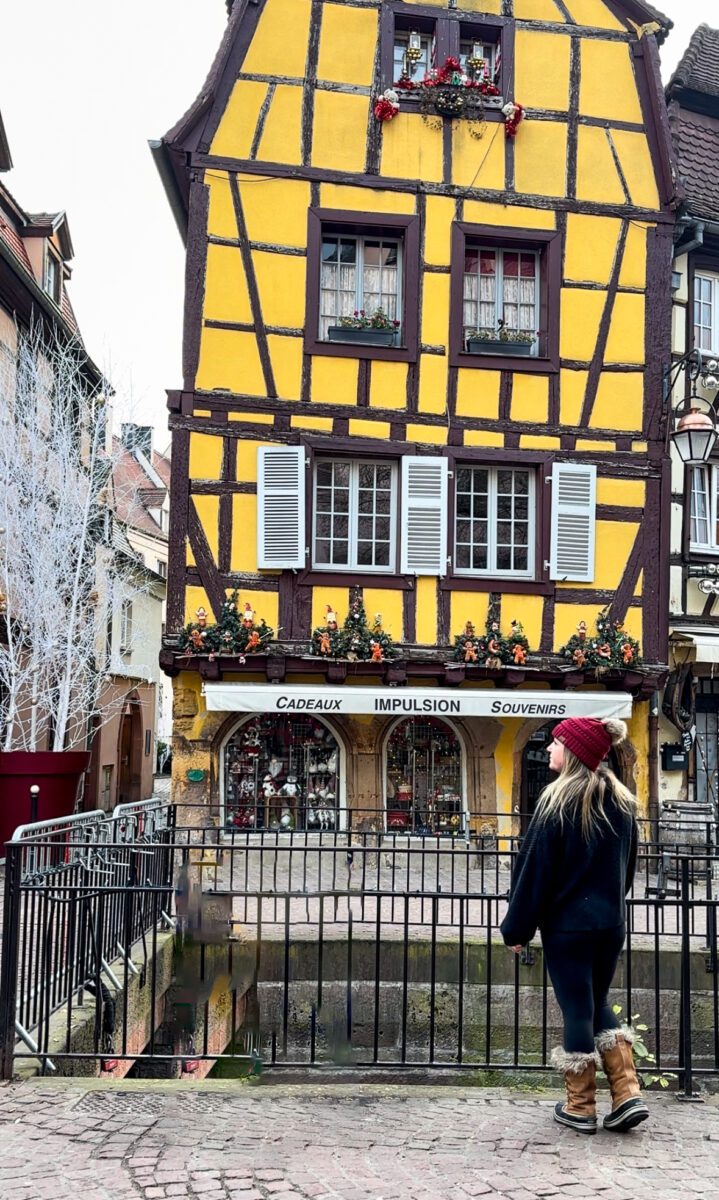
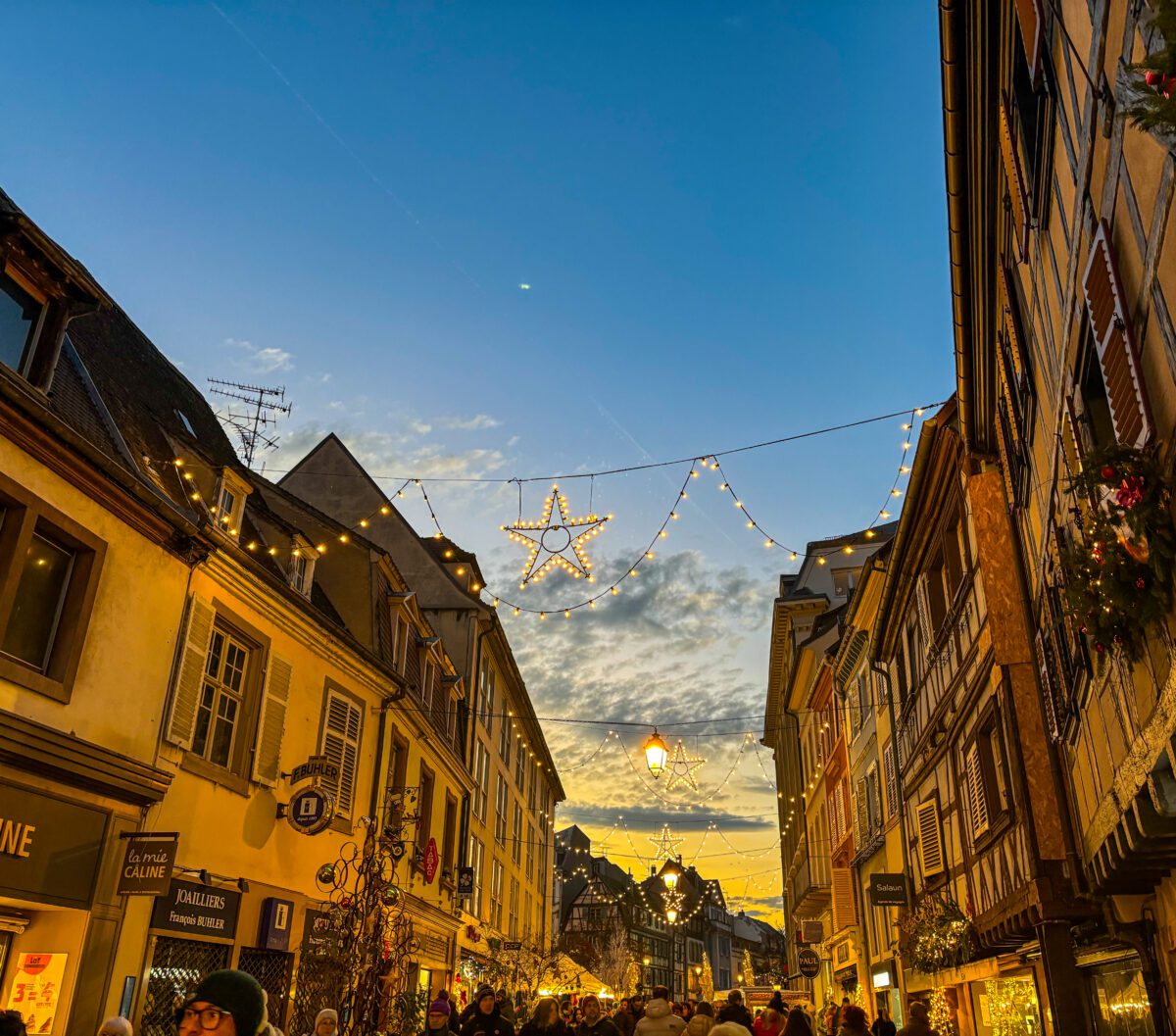
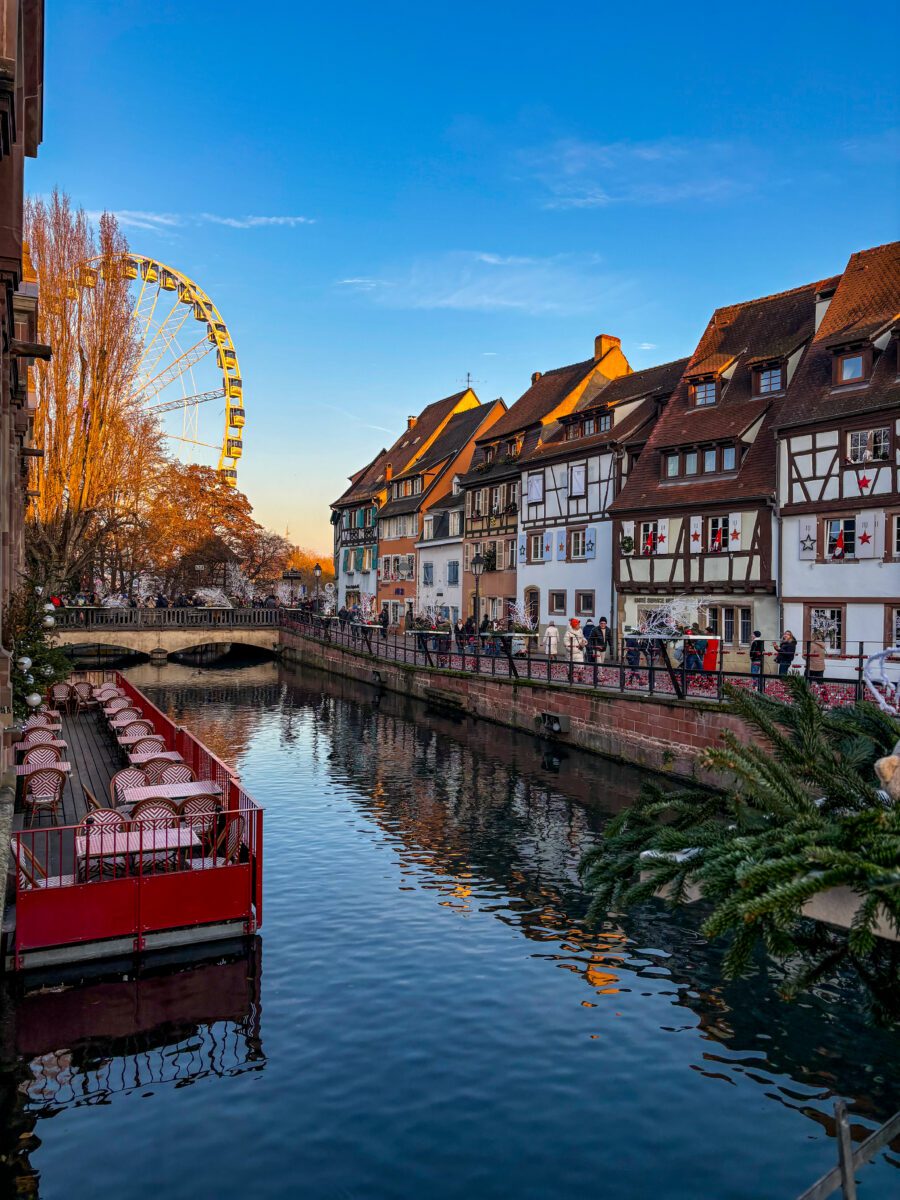
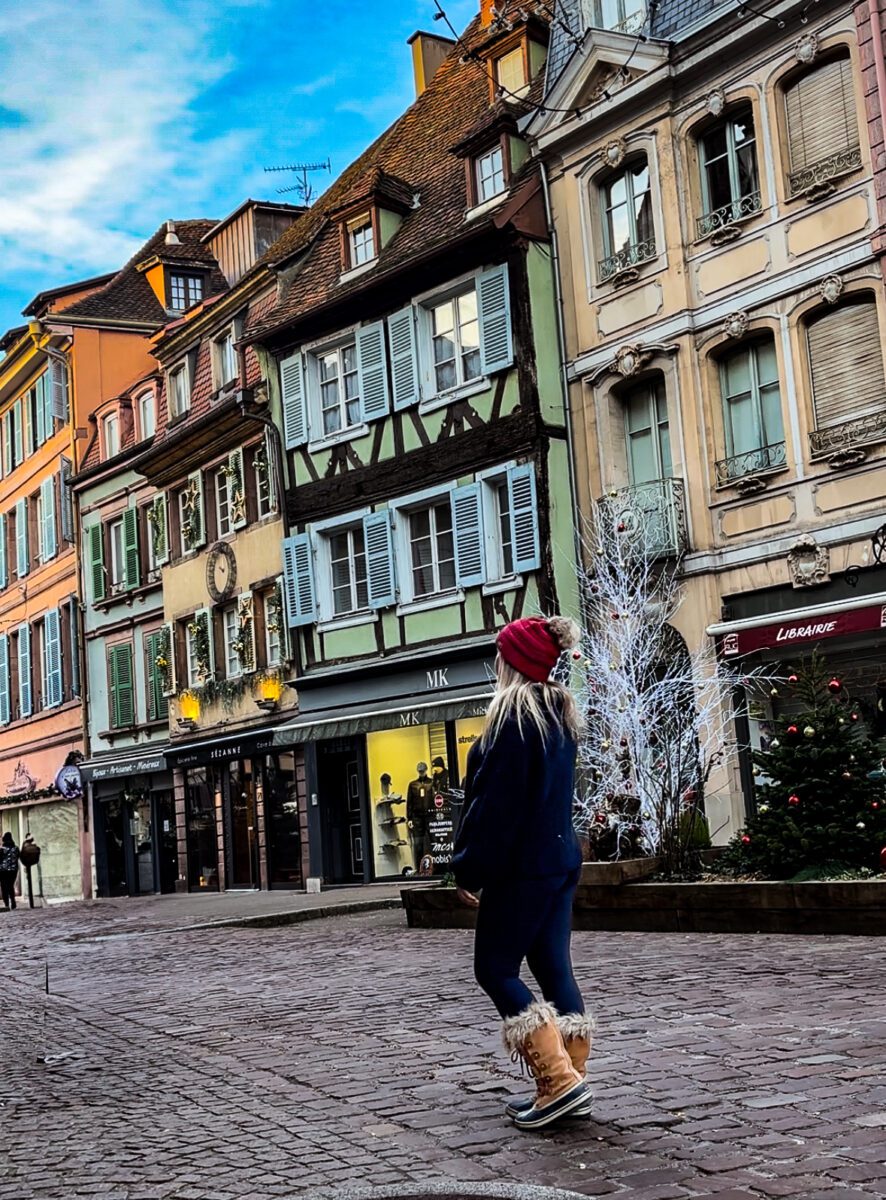
Check in and head straight out to explore Colmar’s Old Town. Start at Place Jeanne d’Arc and wander down Grand Rue — the pink gingerbread house at the end of the street and the Belle’s facade square are not to be missed. Continue to Place de l’Ancienne Douane and then down to Little Venice (Petite Venise) — the canals and colorful house reflections are stunning in the afternoon light. Stop in at a local wine bar for a Riesling or Crémant to settle in.
Evening
Dinner in Colmar — book ahead, the good spots fill up. Try a traditional Alsatian brasserie for tarte flambée and choucroute (my Colmar restaurant guide has my full list). The streets are beautiful at dusk, so take a post-dinner wander through Little Venice when the crowds thin.
Day 2: Riquewihr, Ribeauvillé & Kaysersberg
How to Spend Day 2
Morning — Riquewihr
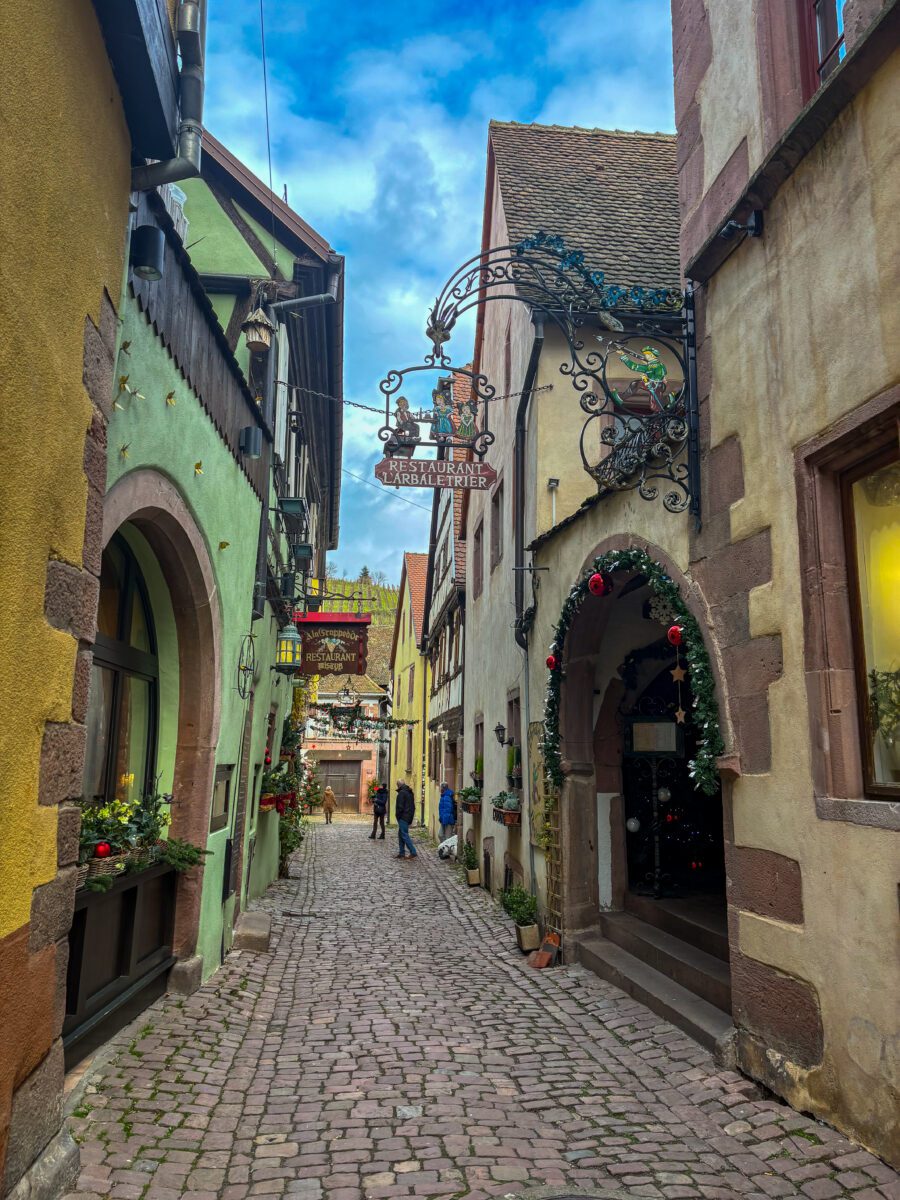
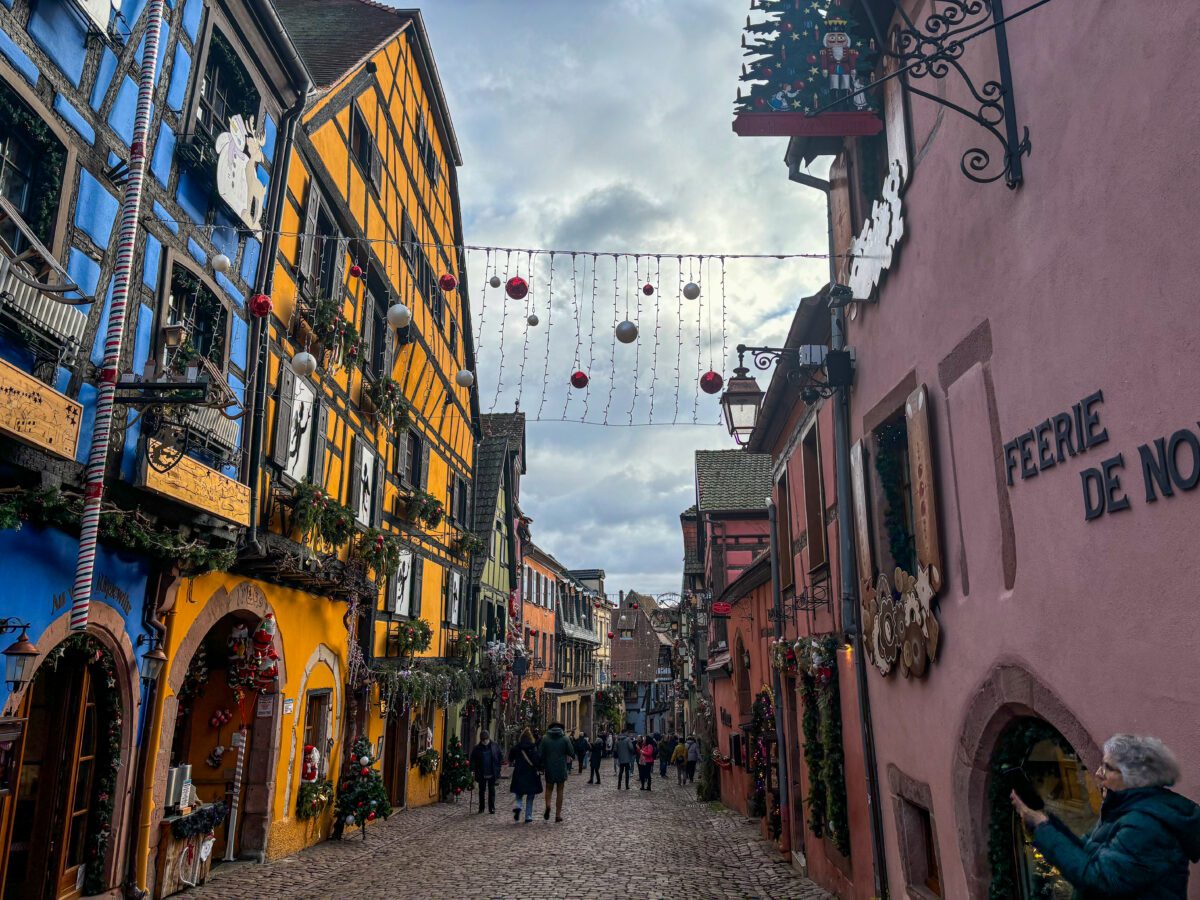
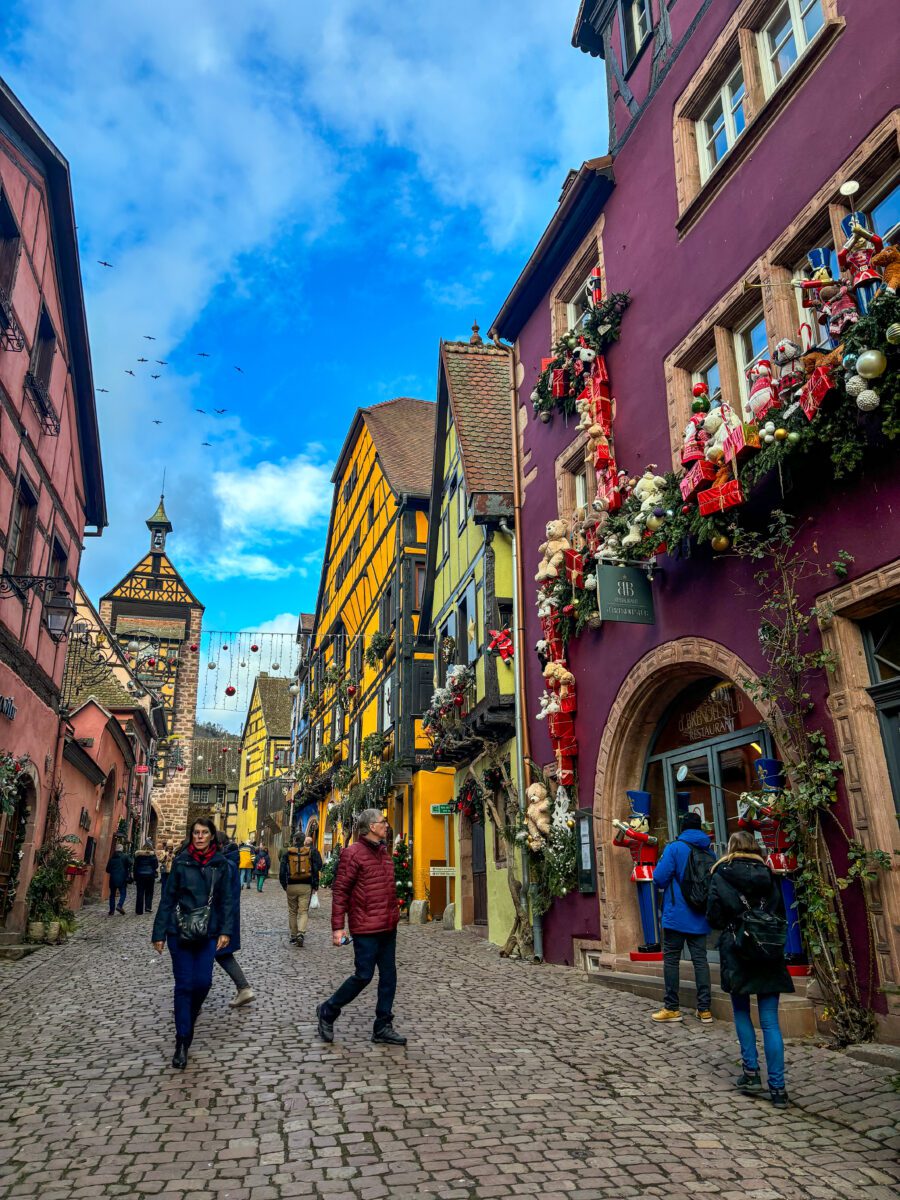
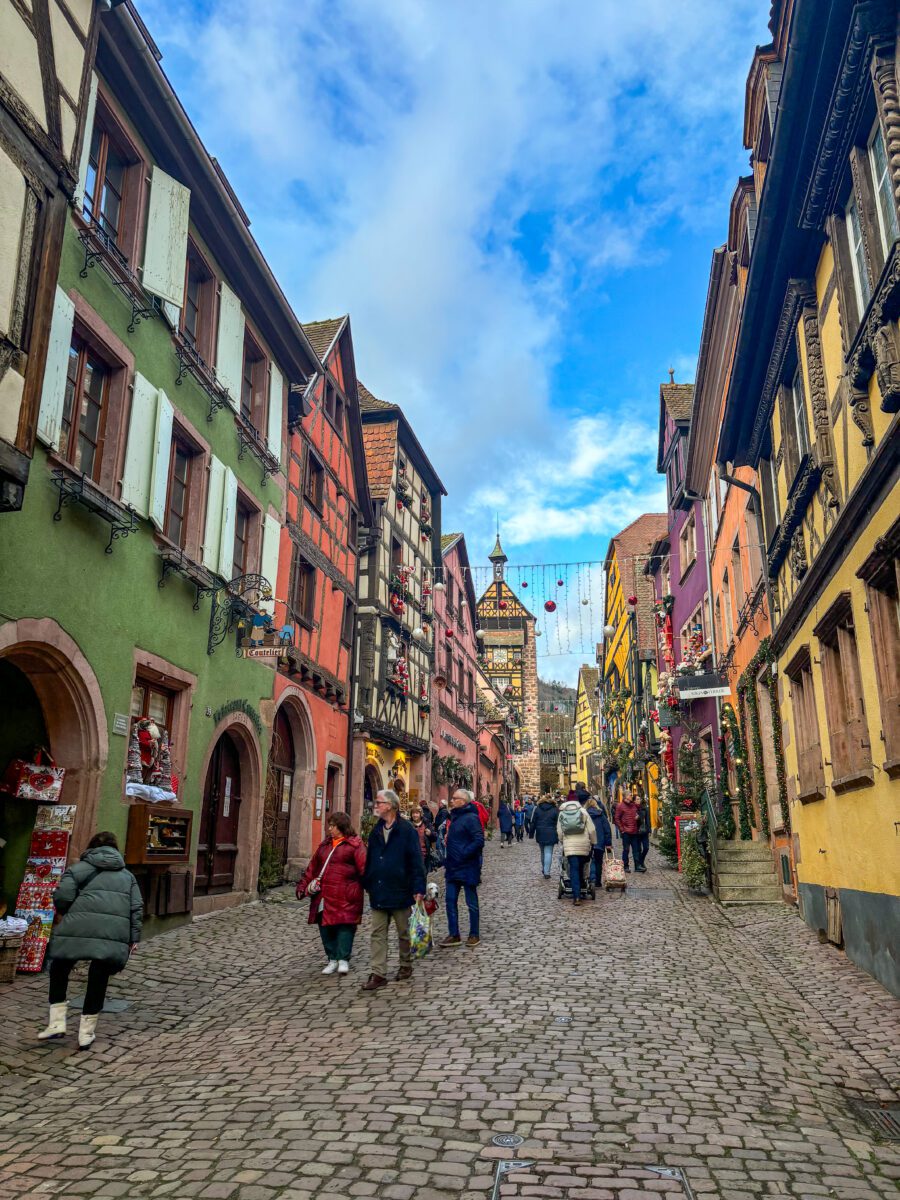
Head out early (before 9am if possible) to Riquewihr, 20 minutes from Colmar by car. This tiny medieval wine town is one of the most beautiful in Alsace — half-timbered houses in every color of the rainbow, a main street lined with wine shops and cellar doors, and vineyard hillsides rising behind it. It’s also supposedly one of the inspirations for Disney’s Beauty and the Beast village. Walk the main Rue du Général de Gaulle end to end, stop for a tasting at one of the cellar doors, and explore the old Dolder tower. Leave before the tour buses fully arrive.
Late Morning — Ribeauvillé
Drive 10 minutes to Ribeauvillé — another charming medieval town with beautiful half-timbered architecture and three ruined castles above it on the ridge (the Trois Châteaux). The main street is lovely for a wander; if you have energy, the hike up to the castles takes about 45 minutes and rewards with great views over the vineyards below.
Afternoon — Kaysersberg
Drive another 15 minutes northwest to Kaysersberg, voted France’s Favorite Village in 2017. The town has a beautifully preserved historic center built around a rushing stream, with a medieval fortified bridge and a ruined imperial castle above. It’s slightly less touristed than Riquewihr and has a more authentically local feel. Stop for a long lunch or an afternoon tasting here before heading back to Colmar for the evening.
Don’t skip the castle. The Château de Kaysersberg sits on the hill right above the old town, and getting there is half the fun — two staircases and a path that takes you straight up through the vineyards.You can climb the 122 steps to the top platform. From up there you get the whole town below you, the entrance to the valley, vineyards in every direction, and the Black Forest over in Germany on a clear day. It’s completely free with no set opening hours, so you can just wander up whenever.
A few things I’d want to know first: part of the stairwell is properly dark, wear sneakers — the spiral staircase is a bit of a workout, though there are spots to catch your breath on the way up. And if you’re photographing the town from the top, go early afternoon; in the morning you’ll be shooting straight into the sun.
Day 3: Eguisheim & Colmar
How to Spend Day 3
Morning — Eguisheim
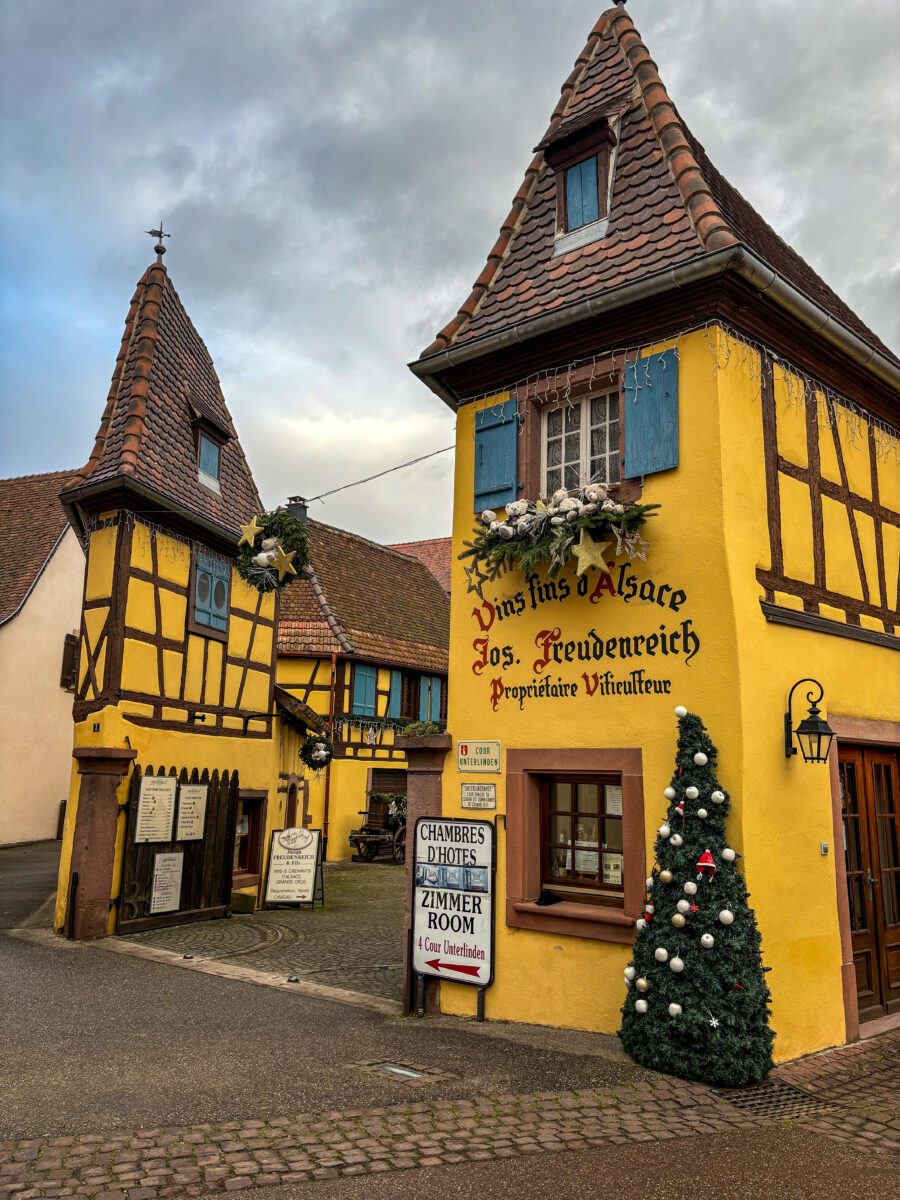
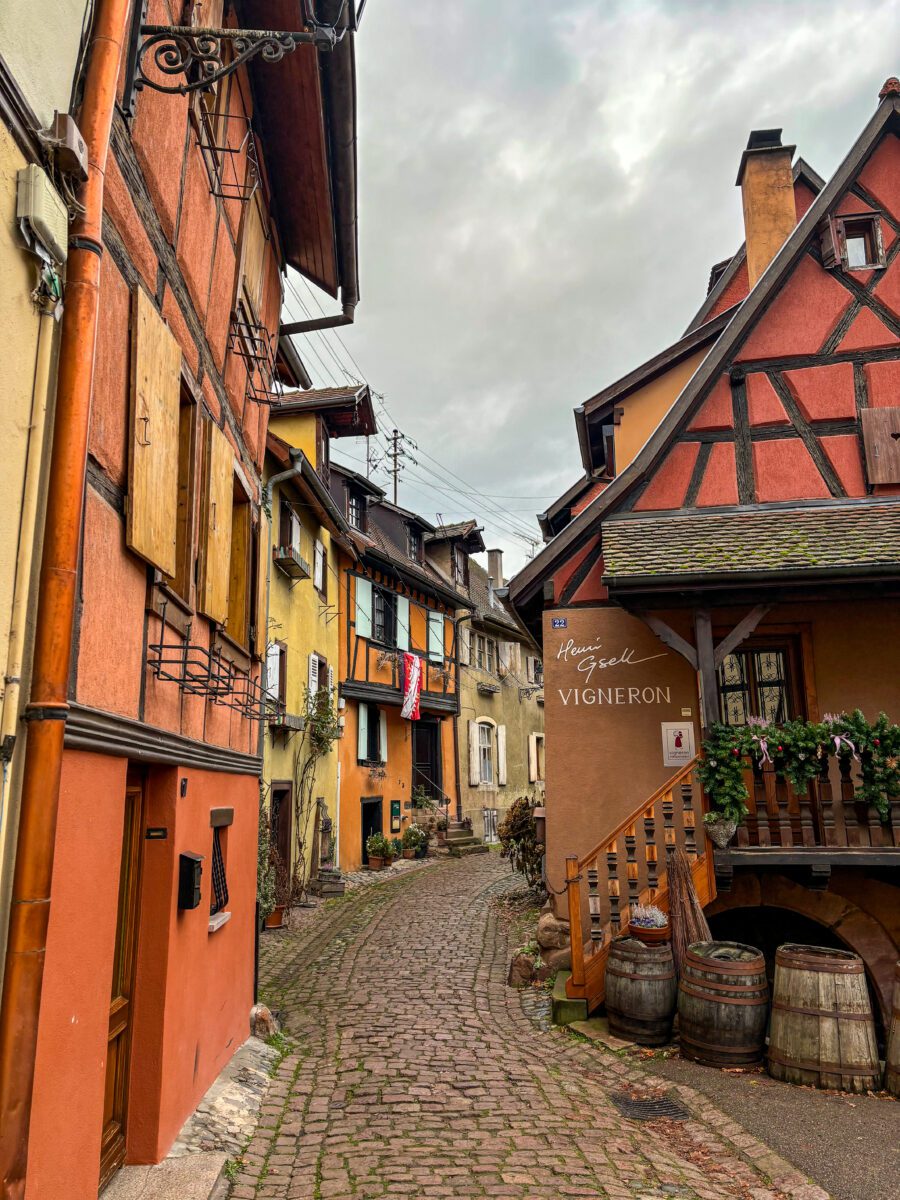
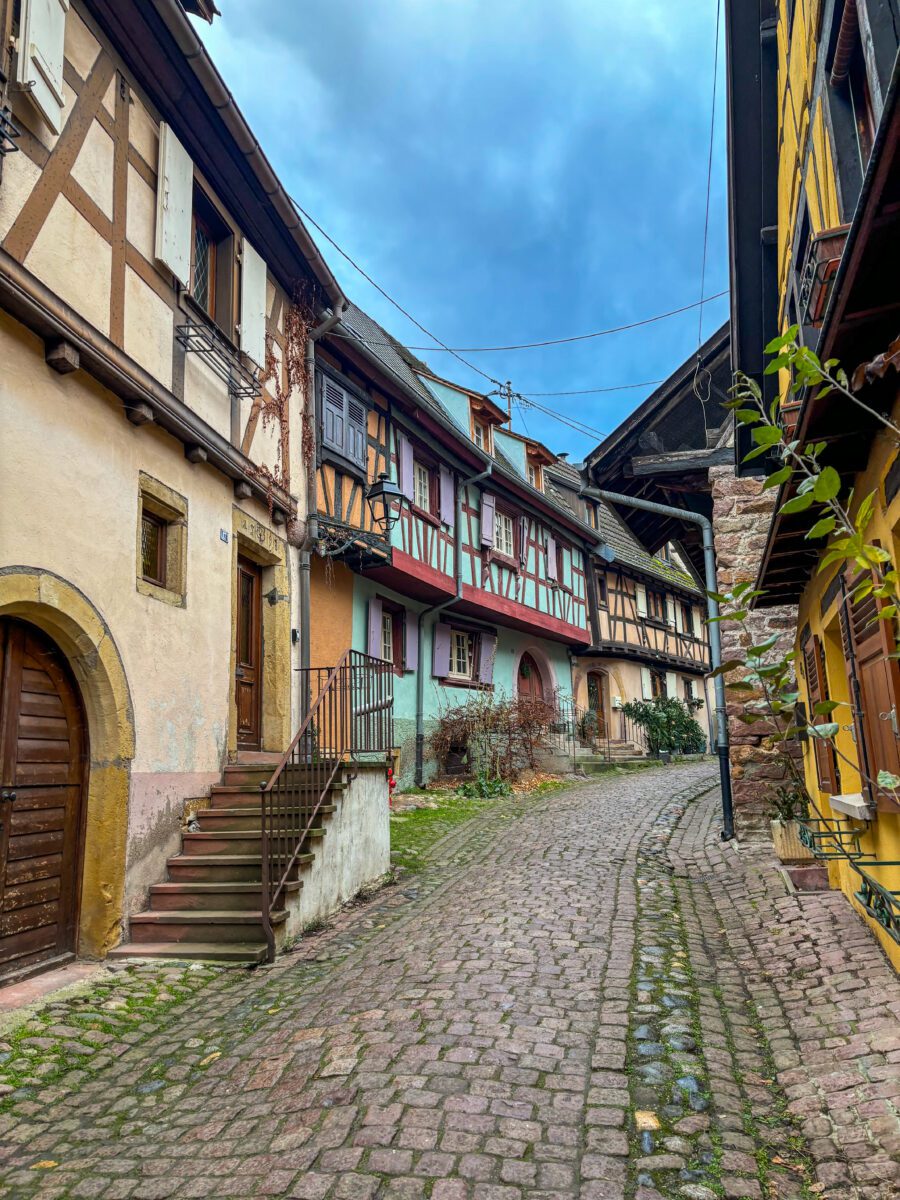
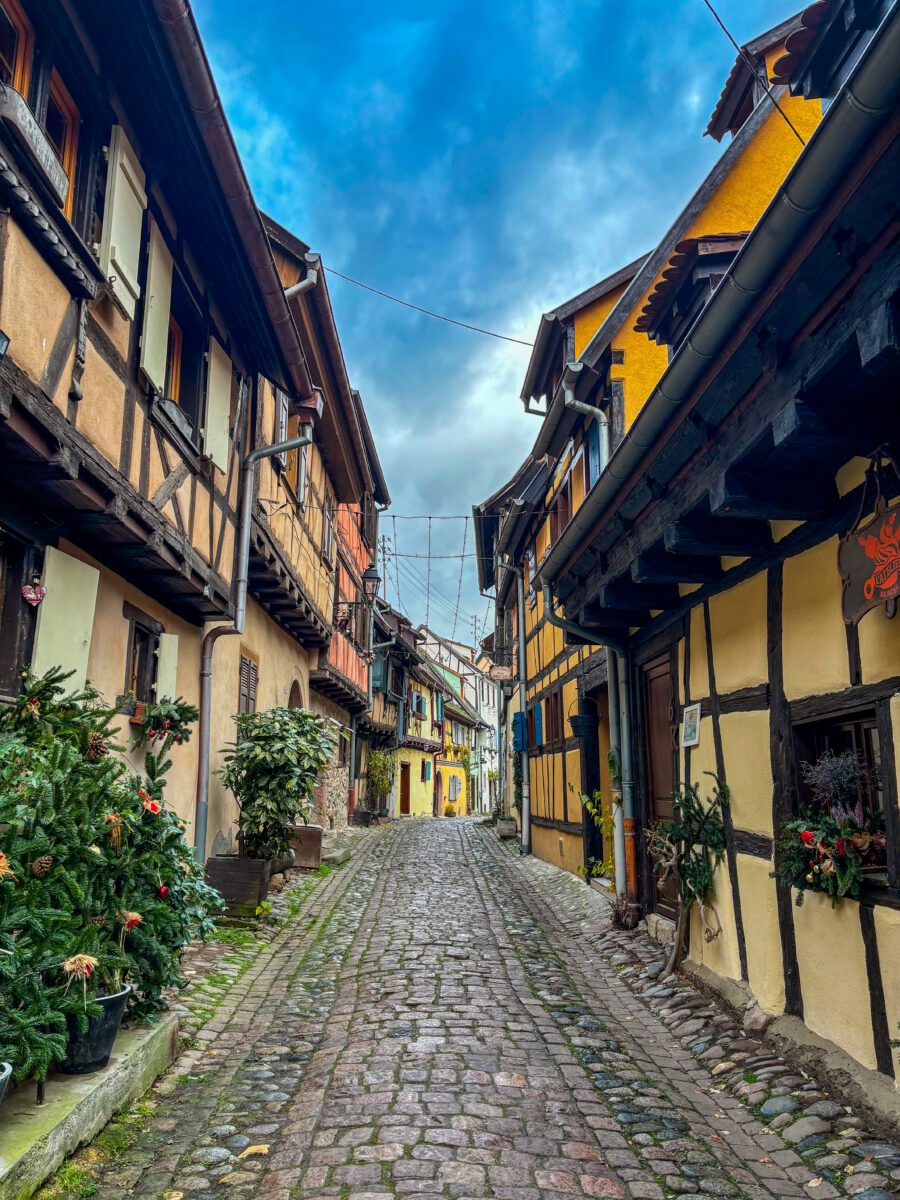
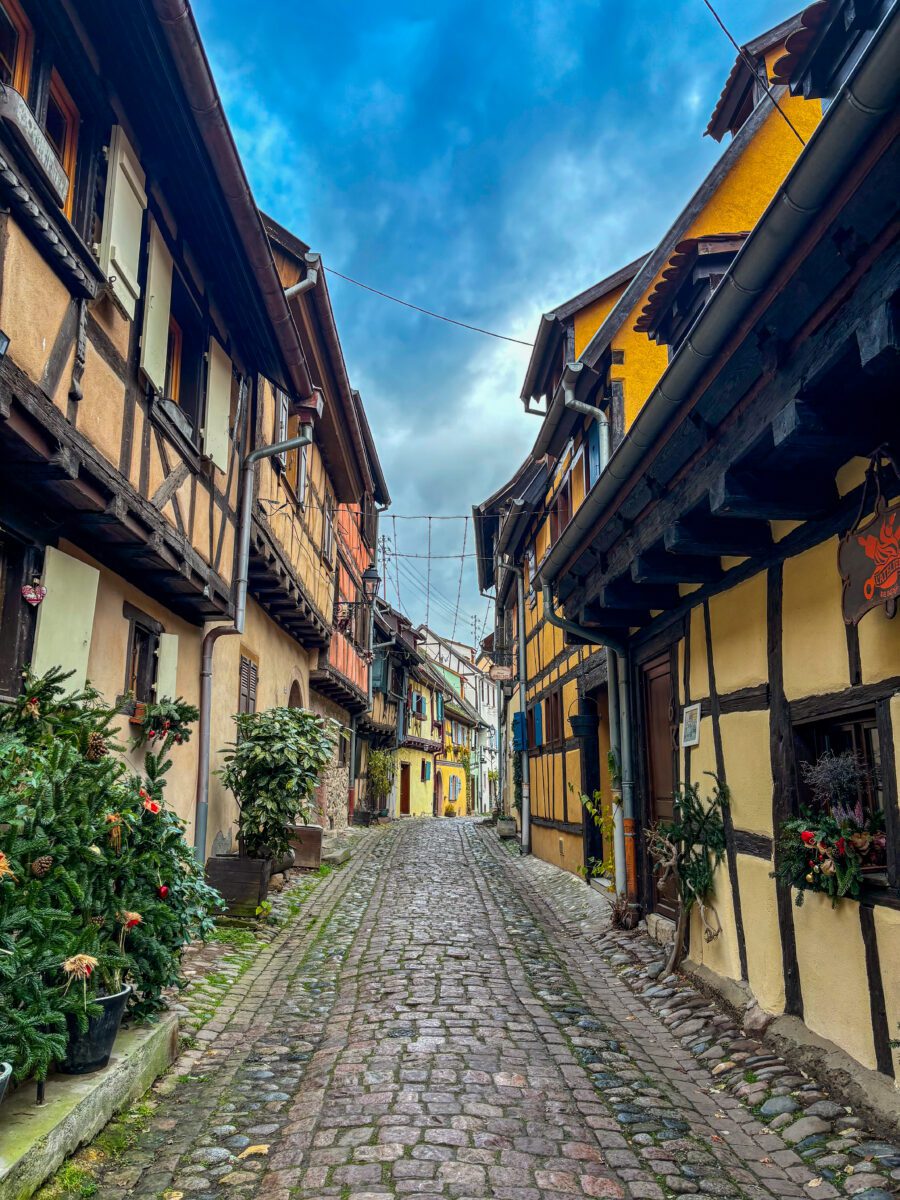
Eguisheim is 12 minutes from Colmar and one of the most charming villages in Alsace. The medieval town is built in concentric circular rings around a central courtyard — it’s like a living medieval maze of colorful flower-draped houses. Go early for the best experience. It only takes 1–2 hours to explore fully.
Afternoon — Colmar
Back to Colmar for one last afternoon — revisit any spots you missed, browse the local wine and food shops, or take a boat ride through Little Venice if you didn’t on Day 1. Good place to pick up bottles to bring home (Riesling and Gewurztraminer from a local producer are excellent choices).
5-Day Alsace Wine Route Itinerary
Base: Colmar (3 nights) + Strasbourg (2 nights)
The 5-day version adds a full day to slow down in Colmar and Eguisheim, then moves north to Strasbourg for the last two nights — with the option to break up the drive at Haut-Koenigsbourg Castle and a morning in Obernai on the final day.
Day 1: Arrive in Colmar
Same as the 3-day version — arrive, settle in, explore Little Venice and the Old Town in the afternoon. Dinner in Colmar.
Day 2: Colmar in Depth & Eguisheim
Morning
Spend the morning exploring Colmar more thoroughly — the Dominican Church at Place des Dominicains, the Unterlinden Museum (home to the Isenheim Altarpiece, one of the most significant works of Northern Renaissance art), and the covered market. Early morning in the Old Town before the day-trippers arrive is a completely different experience.
Afternoon — Eguisheim
Head to Eguisheim in the afternoon for a wander through the circular lanes. Stop at a cellar door for a tasting — Eguisheim is home to some excellent producers — before returning to Colmar for dinner.
Day 3: Riquewihr, Ribeauvillé & Kaysersberg
Same as Day 2 in the 3-day itinerary — early morning Riquewihr, late morning Ribeauvillé, then an afternoon in Kaysersberg before heading back to Colmar for the evening.
Kaysersberg is worth the extra stop — voted France’s Favorite Village in 2017, with a beautifully preserved historic center built around a rushing stream, a medieval fortified bridge, and a ruined imperial castle above town. It’s slightly less touristed than Riquewihr and has a more authentically local feel. Stop for a long lunch or an afternoon tasting before driving back.
With a bit more time in your day than the 3-day version allows, this is where I’d fit in the climb up to the Château de Kaysersberg — a free walk up through the vineyards and 122 steps to the top of the keep, with views over the town, the valley and the vineyards (see the 3-day itinerary above for the full details and my tips).
Day 4: Travel to Strasbourg
Getting There
Train from Colmar to Strasbourg — 30 minutes direct. If you have a car, the drive takes about an hour on the motorway, or longer (and much prettier) if you follow the wine route north.
Optional stop on the way: if you’re driving, break up the trip at Haut-Koenigsbourg Castle, a beautifully restored medieval fortress perched on a 757m peak above the vineyards, roughly halfway between Colmar and Strasbourg. The panoramic views over the Rhine Plain are exceptional on a clear day — you can see Germany and the Black Forest on the horizon. Allow 2–3 hours to explore the castle properly, then continue north to Strasbourg.
Where to Stay
Pavillon Regent Petite France — the best-located hotel in Strasbourg, right on the canals of La Petite France.
How to Spend Day 4
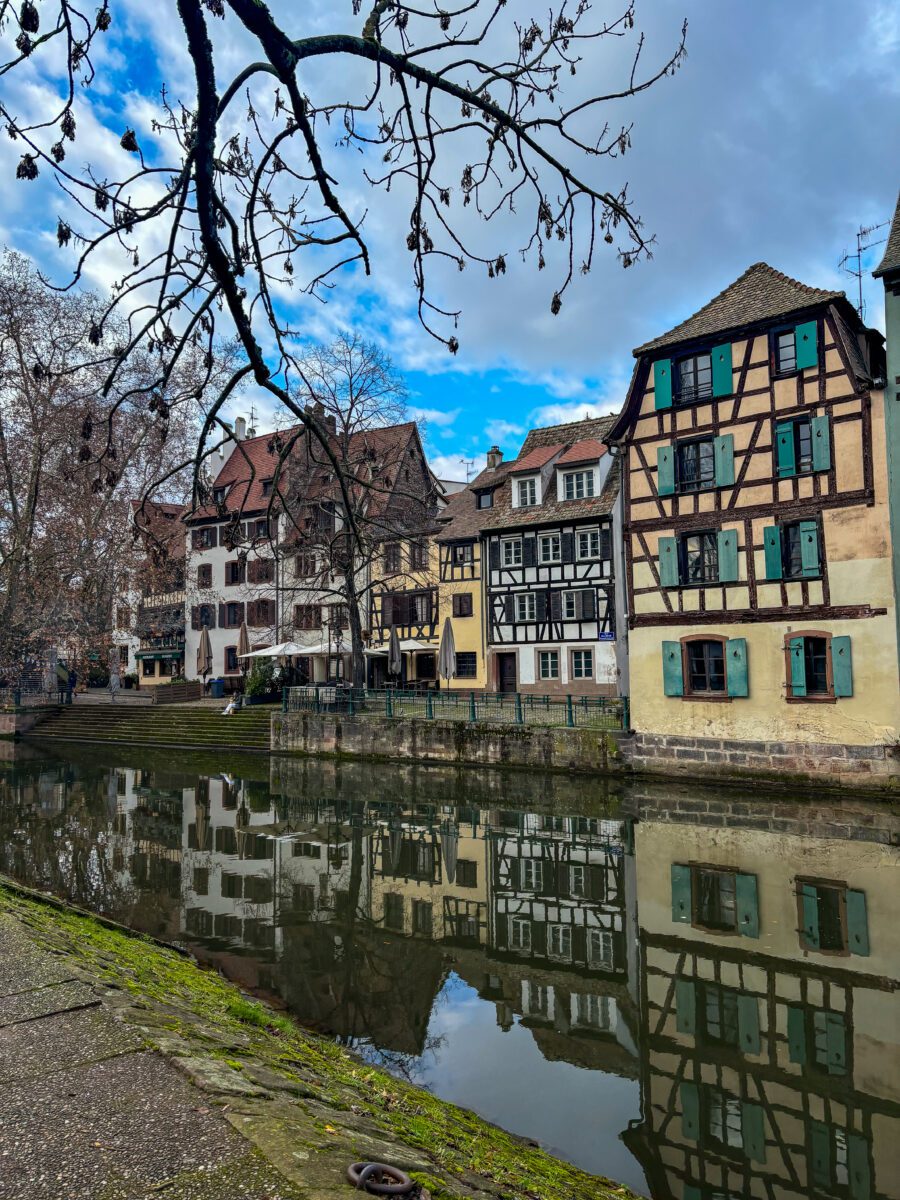
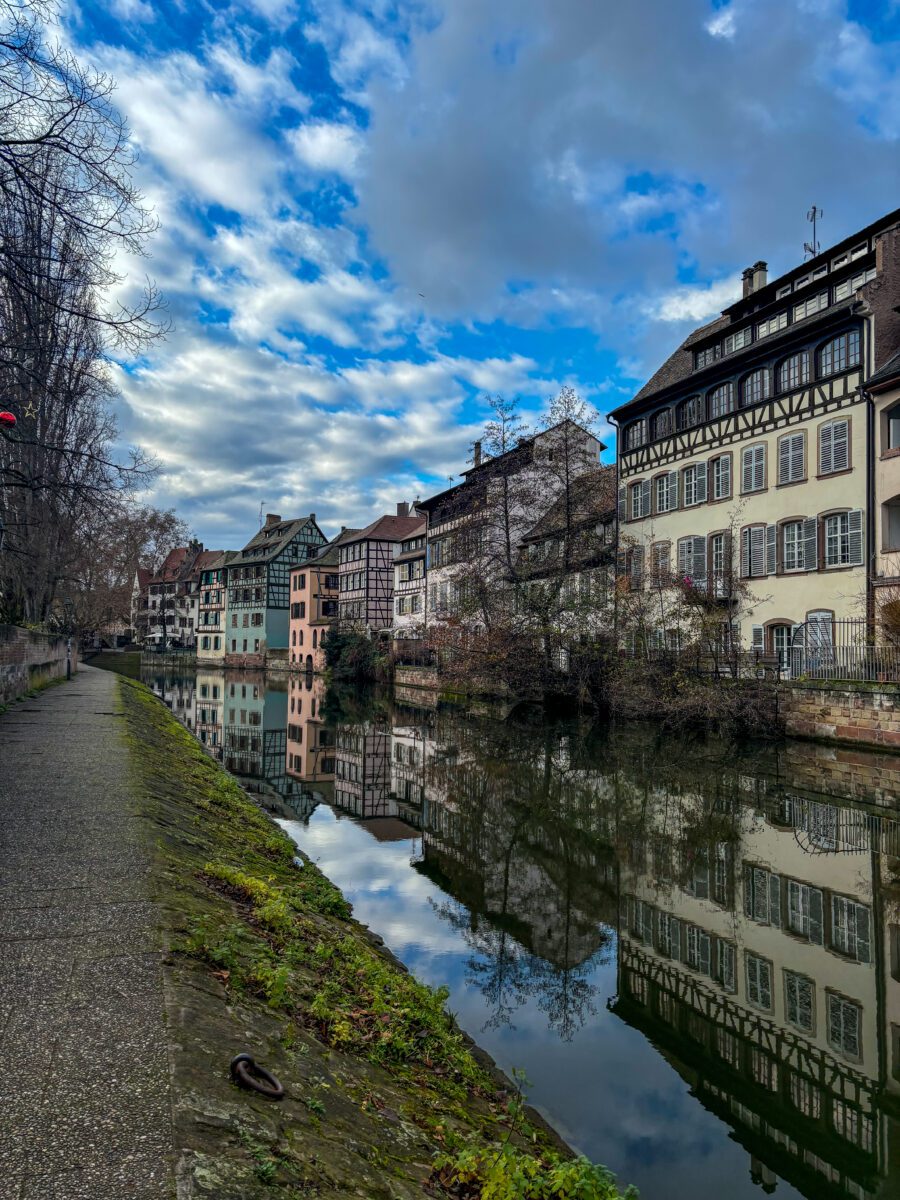
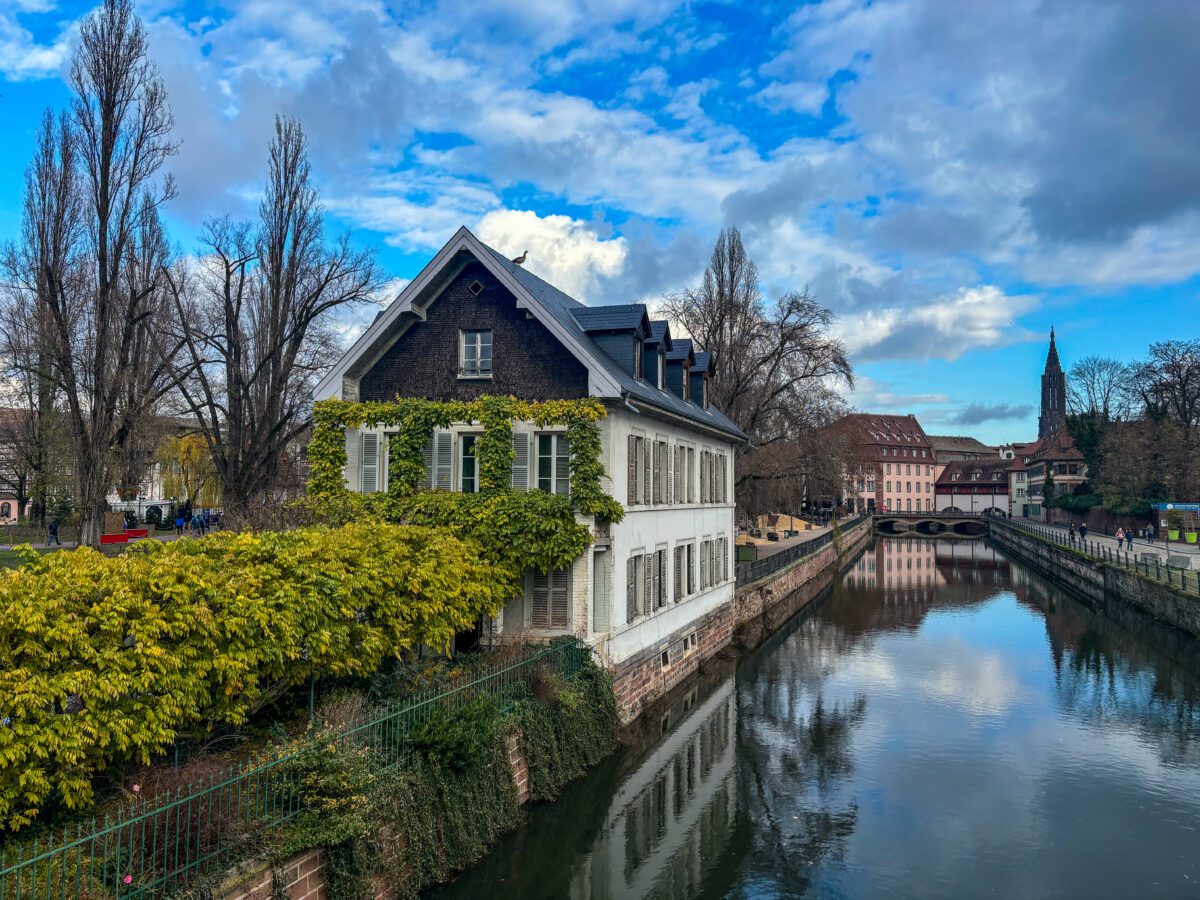
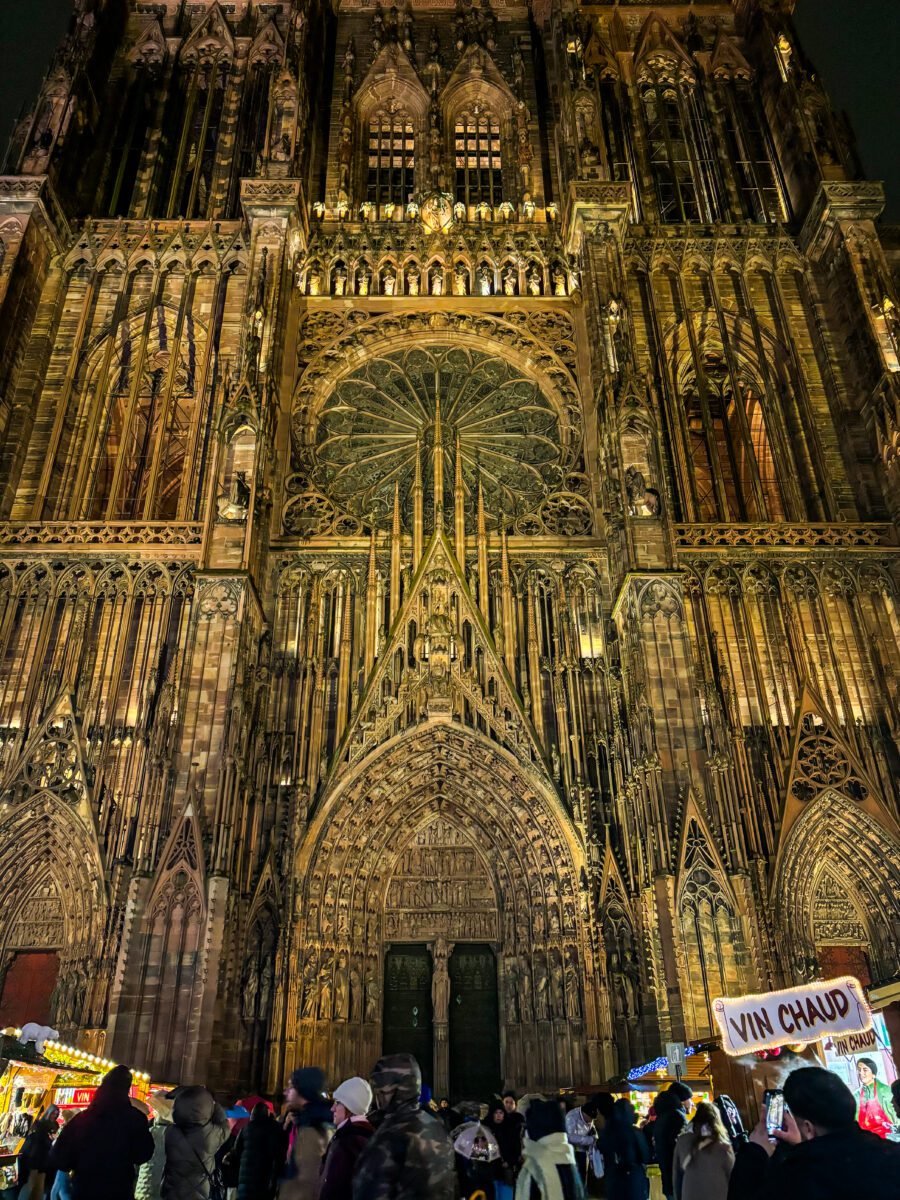
Strasbourg deserves a full day (or more, if you’re extending your trip). Start with the Cathedral — the facade alone will stop you in your tracks — then explore the market streets around it. Head to La Petite France for the canal neighborhoods, half-timbered houses, and the Barrage Vauban viewing terrace above the historic weir. End with dinner somewhere in Petite France (my Strasbourg restaurant guide has my full list).
Day 5: Obernai & Strasbourg
Morning — Obernai
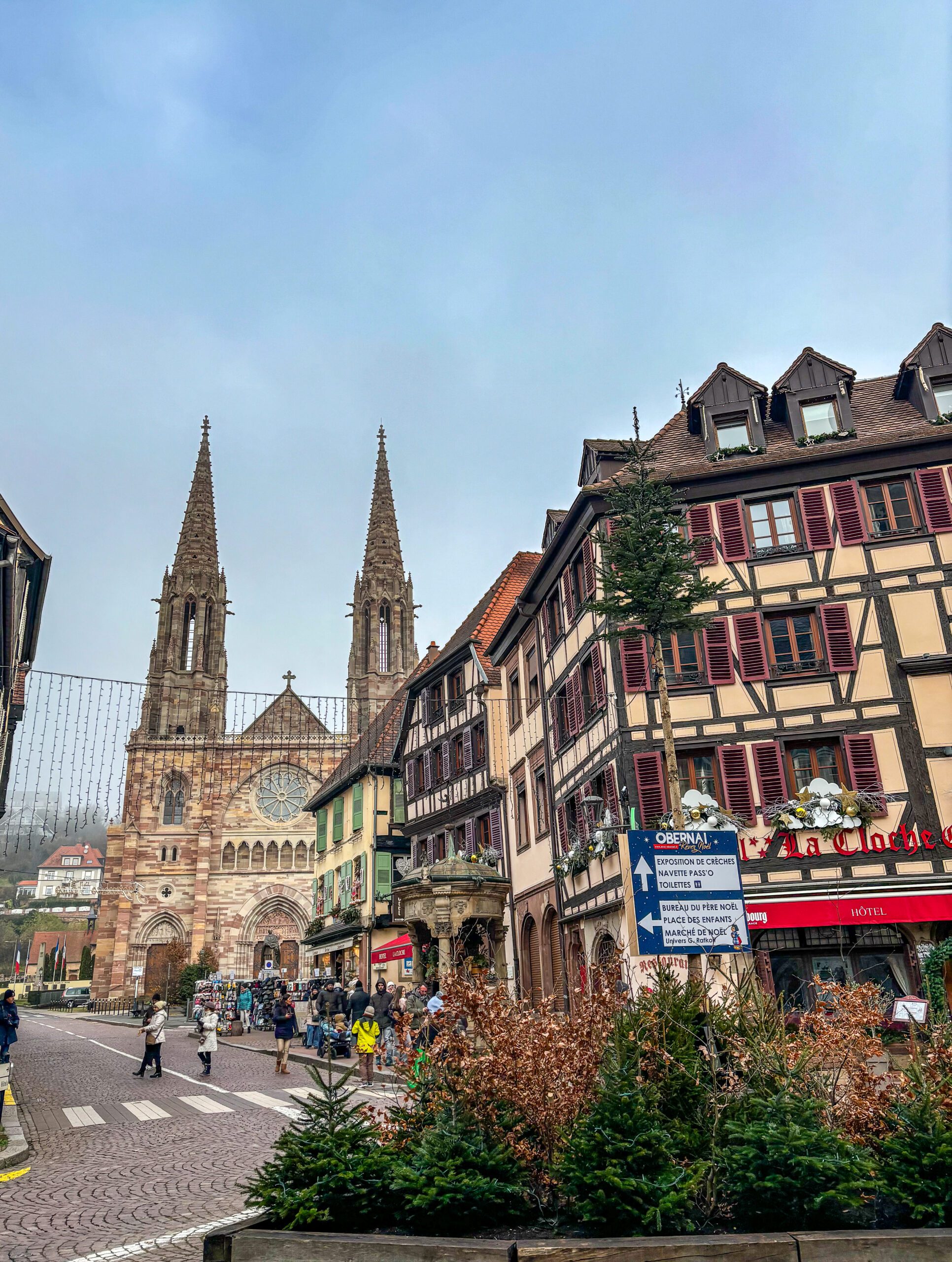
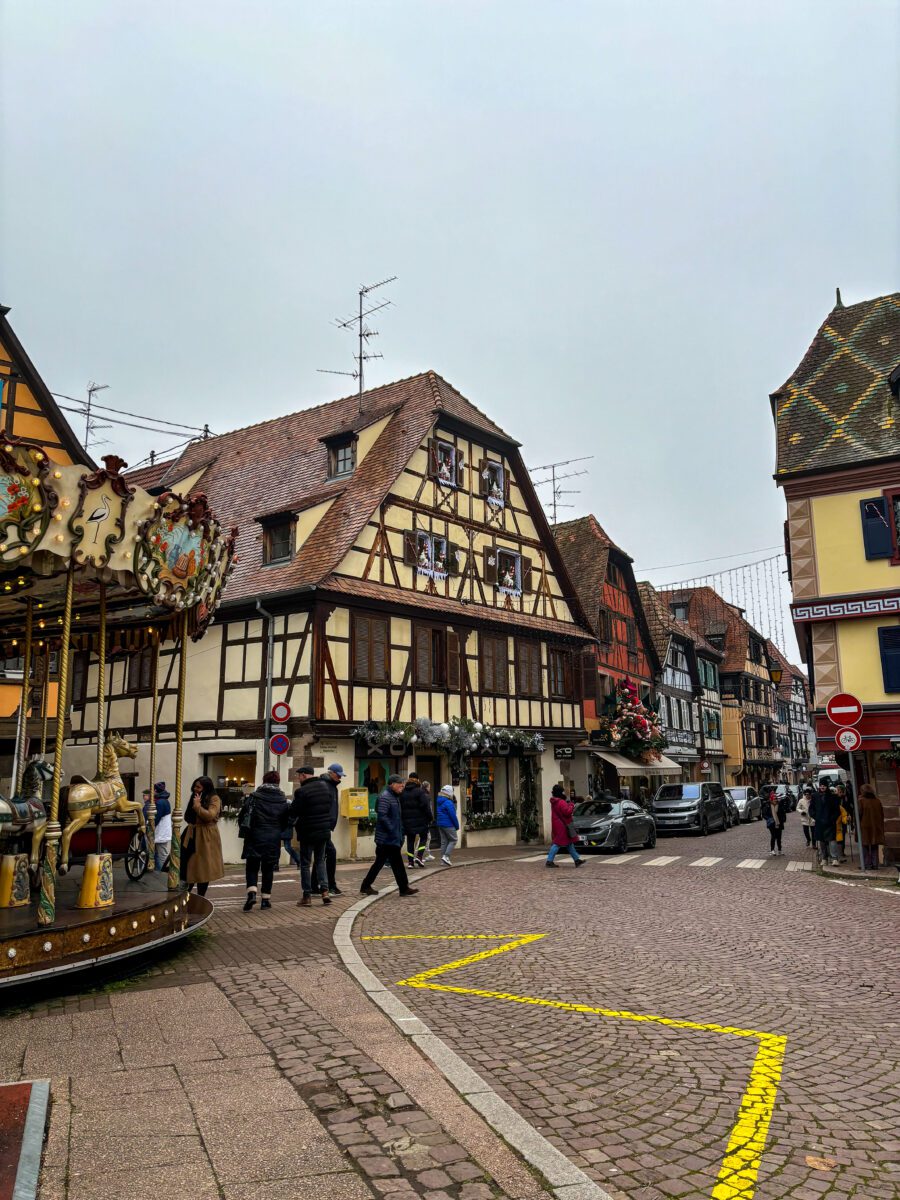
Obernai is 25 minutes from Strasbourg by car or 40 minutes by train and is one of the liveliest of the smaller Alsace towns — less touristy-feeling than some of the more famous wine villages, with a real local energy. The two main squares are both picturesque, the food market is excellent on weekday mornings, and the whole town is very walkable. Spend the morning wandering, then head back to Strasbourg.
Afternoon — Strasbourg
Back to Strasbourg for a final afternoon — revisit anything you missed on Day 4, browse the shops around the Cathedral, or take a boat tour along the Ill River for a different view of the Grande Île. A good afternoon to pick up Alsatian wine and treats to bring home before you head out.
Where to Stay on the Alsace Wine Route
Colmar
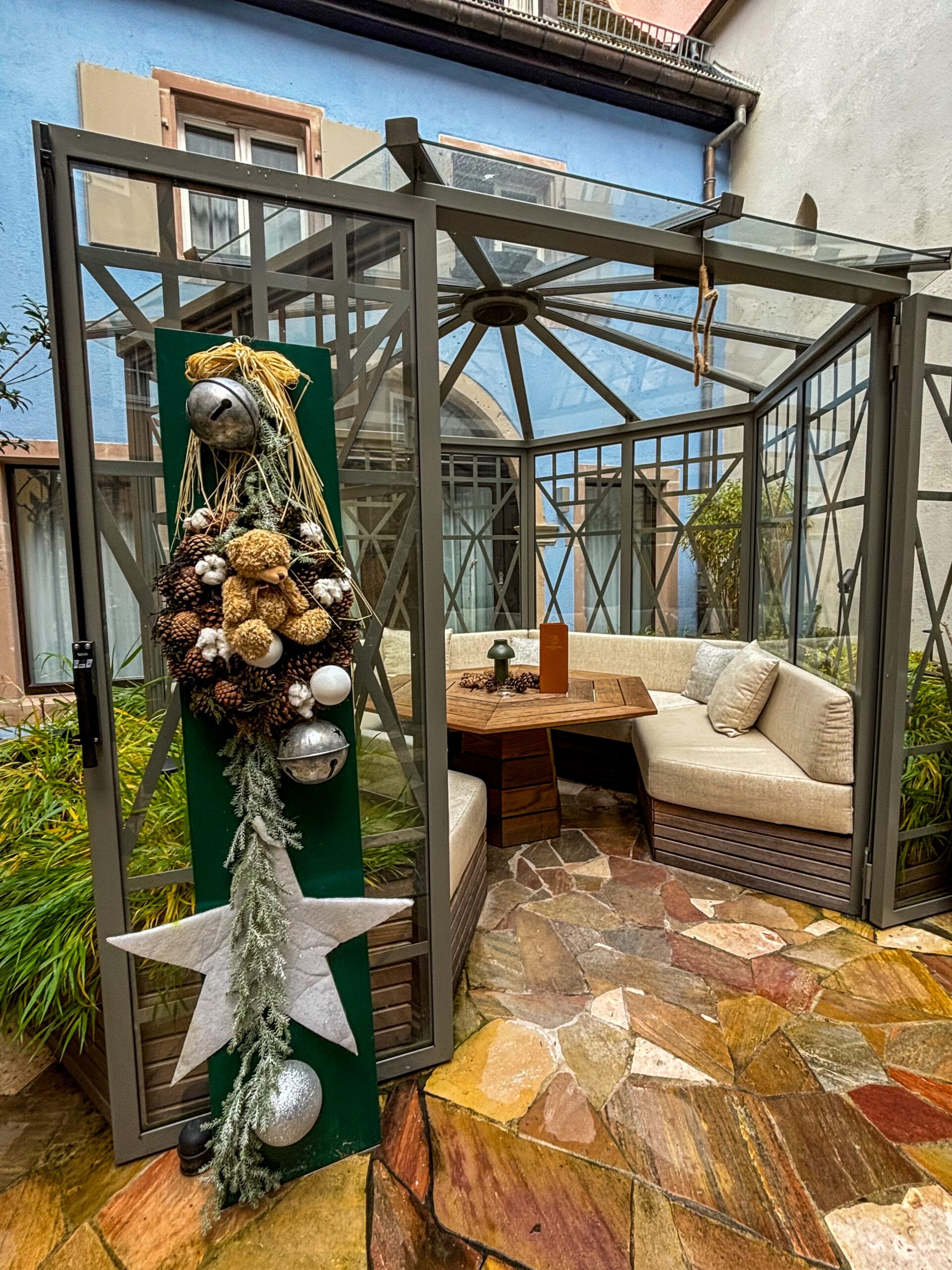
Le Colombier — the best location in Colmar’s Old Town, right in Little Venice. Breakfast on site, lovely outdoor patio. Book well ahead for peak season.
Strasbourg
Pavillon Regent Petite France — canal-side in La Petite France, the most romantic location in the city. Hôtel Gutenberg is a solid more affordable option near the Cathedral.
Getting to Alsace
The two closest airports are Strasbourg (SXB) and Basel EuroAirport (BSL/MLH) — both are roughly equal distance from Colmar. If you’re doing the north-to-south wine route, fly into Strasbourg and out of Basel (or vice versa) to avoid backtracking. Train from Paris to Strasbourg is under 2 hours on the TGV — one of the best value and easiest ways to get here from CDG.
Alsace Wine Route Map
The wine route runs north–south along the eastern foothills of the Vosges, with the heart of the route — Riquewihr, Ribeauvillé, Kaysersberg, and Eguisheim — clustered around Colmar.