Updated on:
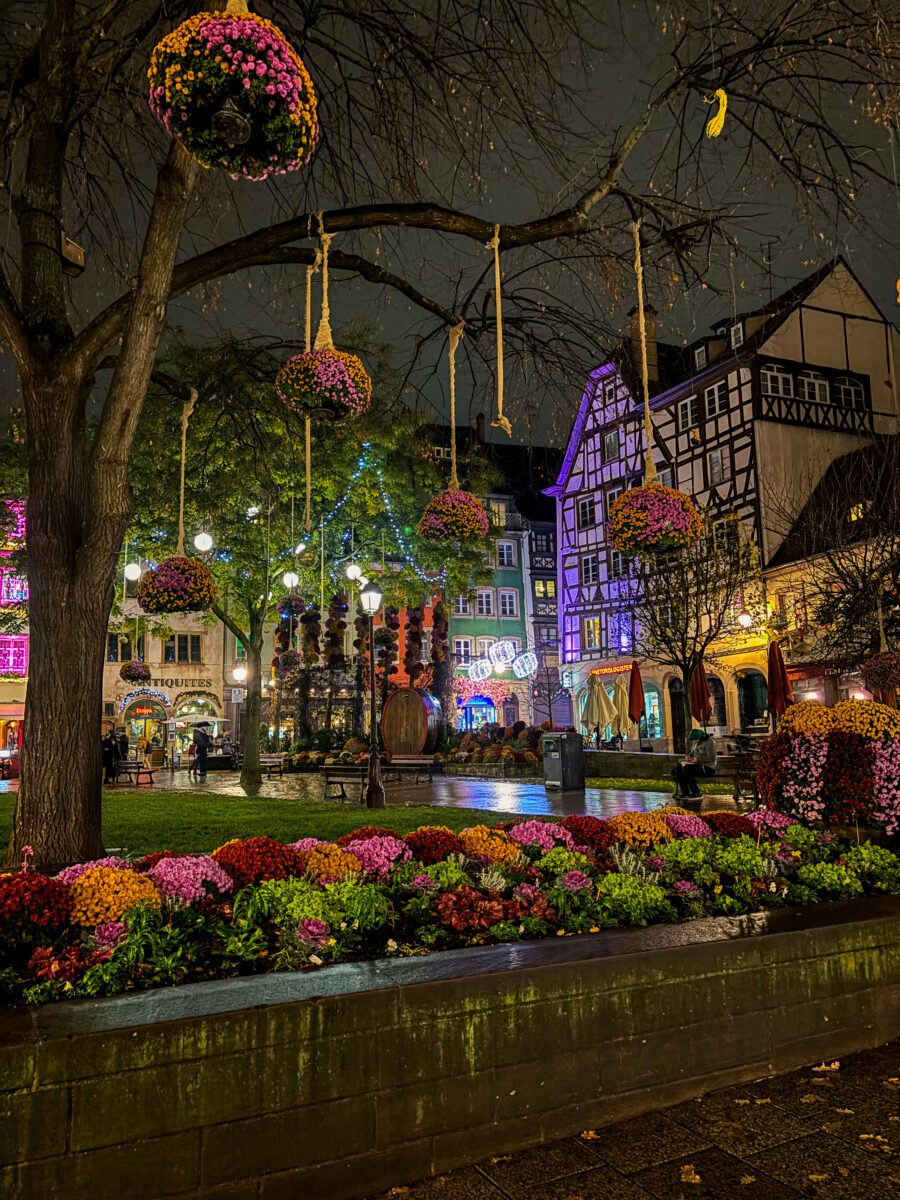
The Alsace region of France is one of those places that looks like it was pulled straight from a fairytale. In fact, it was even the inspiration for an actual fairytale, Belle’s hometown in Beauty & the Beast.
Tucked between the Rhine River and the Vosges Mountains on France’s eastern border with Germany, Alsace is a fascinating blend of French and German culture — you’ll find French brasseries next to half-timbered Alsatian houses, menus written in German and French, and a regional dialect that sounds like neither language quite won. The result is one of the most distinctive and photogenic corners of France.
What makes Alsace special is how much is packed into a small area. You can spend a morning exploring Strasbourg’s magnificent medieval cathedral, an afternoon driving through vineyards past Riquewihr’s colorful houses, and end the evening with a glass of local Riesling on a terrace in Colmar — all in one day. The region is famous for its Christmas markets (some of the best in Europe), but it genuinely shines in every season: lush and green in spring, warm and festive in summer, golden at harvest time in autumn.
Here’s everything you need to know to plan your trip to Alsace.
Jump To:
- *Backpacks & Bubbly – Top Pick for Drinks With A View*
- Getting Around Alsace
- Towns of Alsace
- Where to Stay in Alsace
- Best Things to Do in Alsace
- Getting to Alsace
- When to Visit Alsace
- How Long to Spend in Alsace
- Safety for Solo Female Travelers
- Alsace Map
Disclaimer: This article contains some links where I earn commission through booking. There is no extra cost to you, and I only recommend things I’ve used and love or places I’ve stayed and enjoyed!
*Backpacks & Bubbly – Top Pick for Drinks With A View in Alsace*
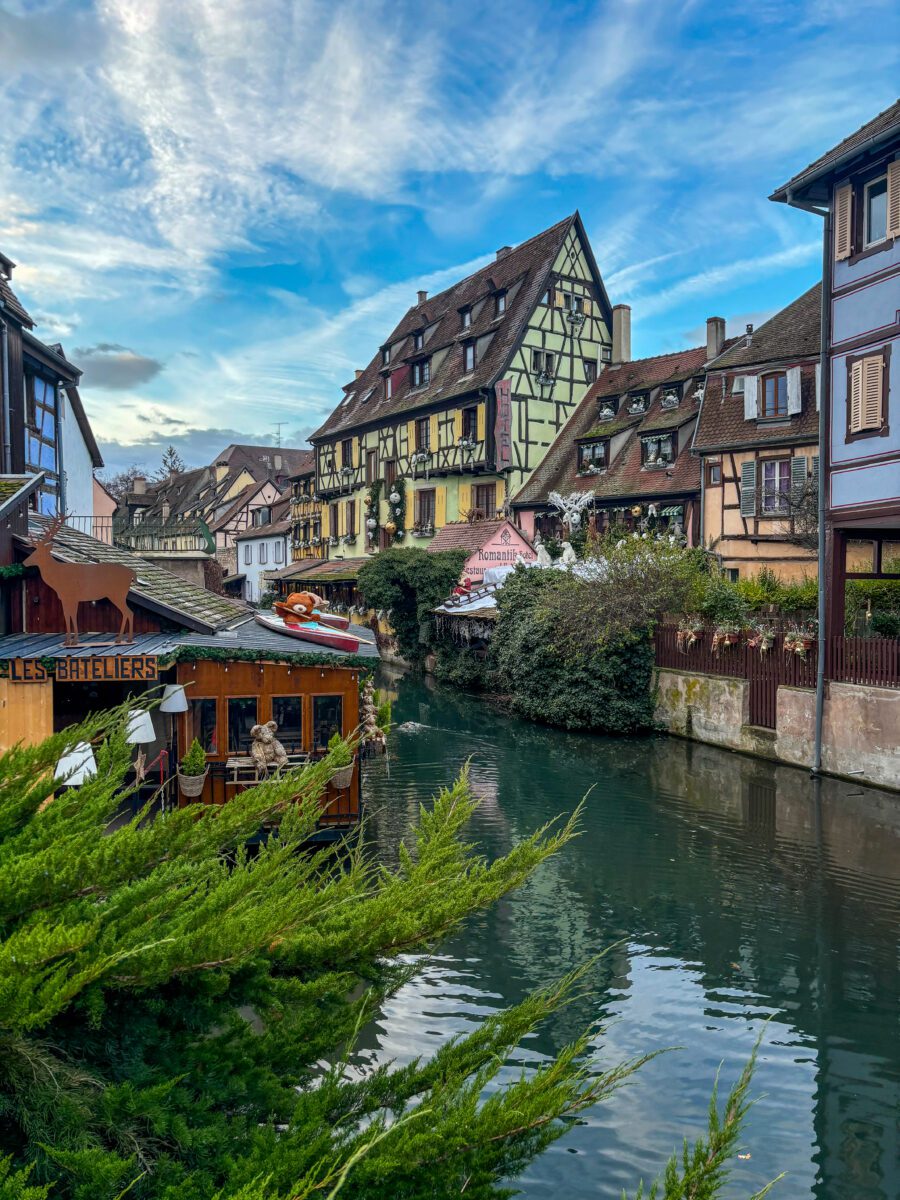
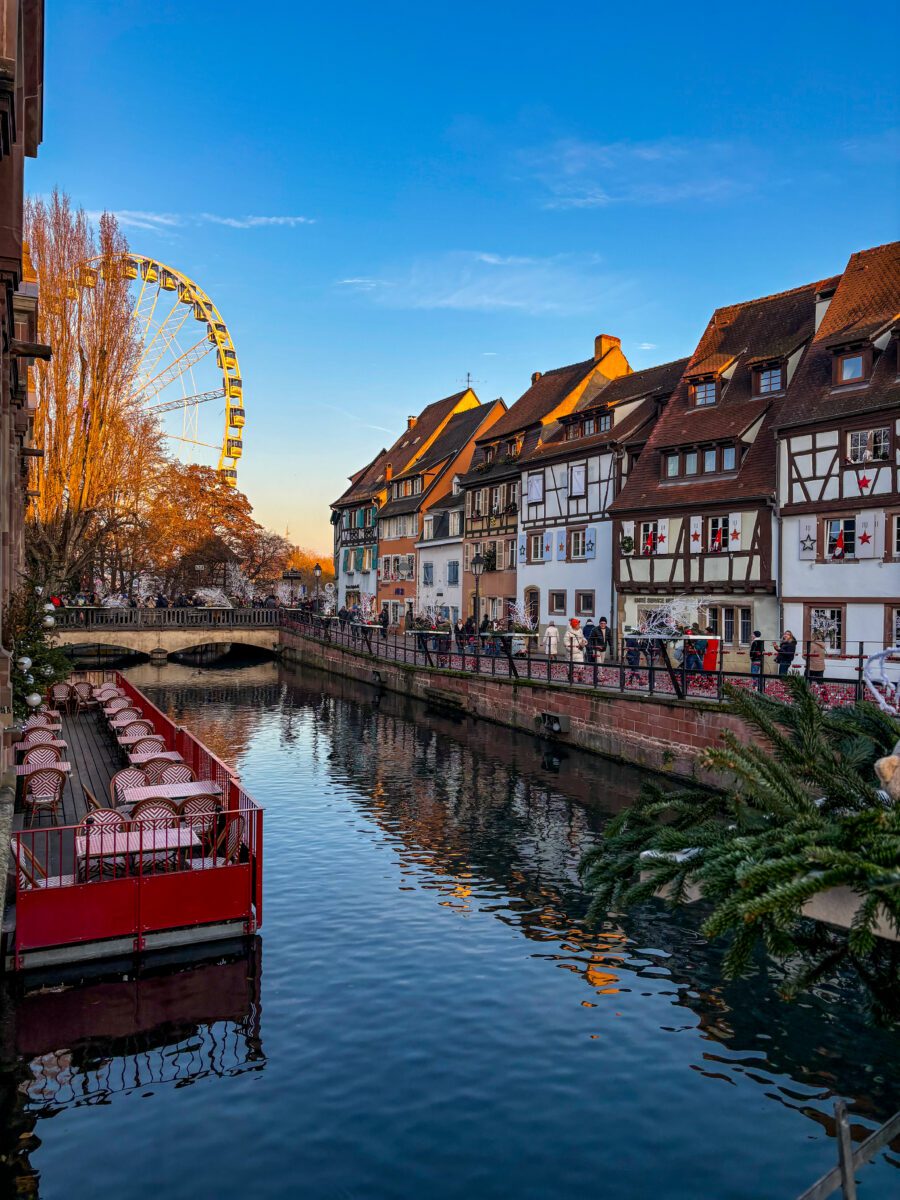
Colmar – Les Bateliers
The most charming little spot right on the canals in Little Venice, this place is an absolute dream!
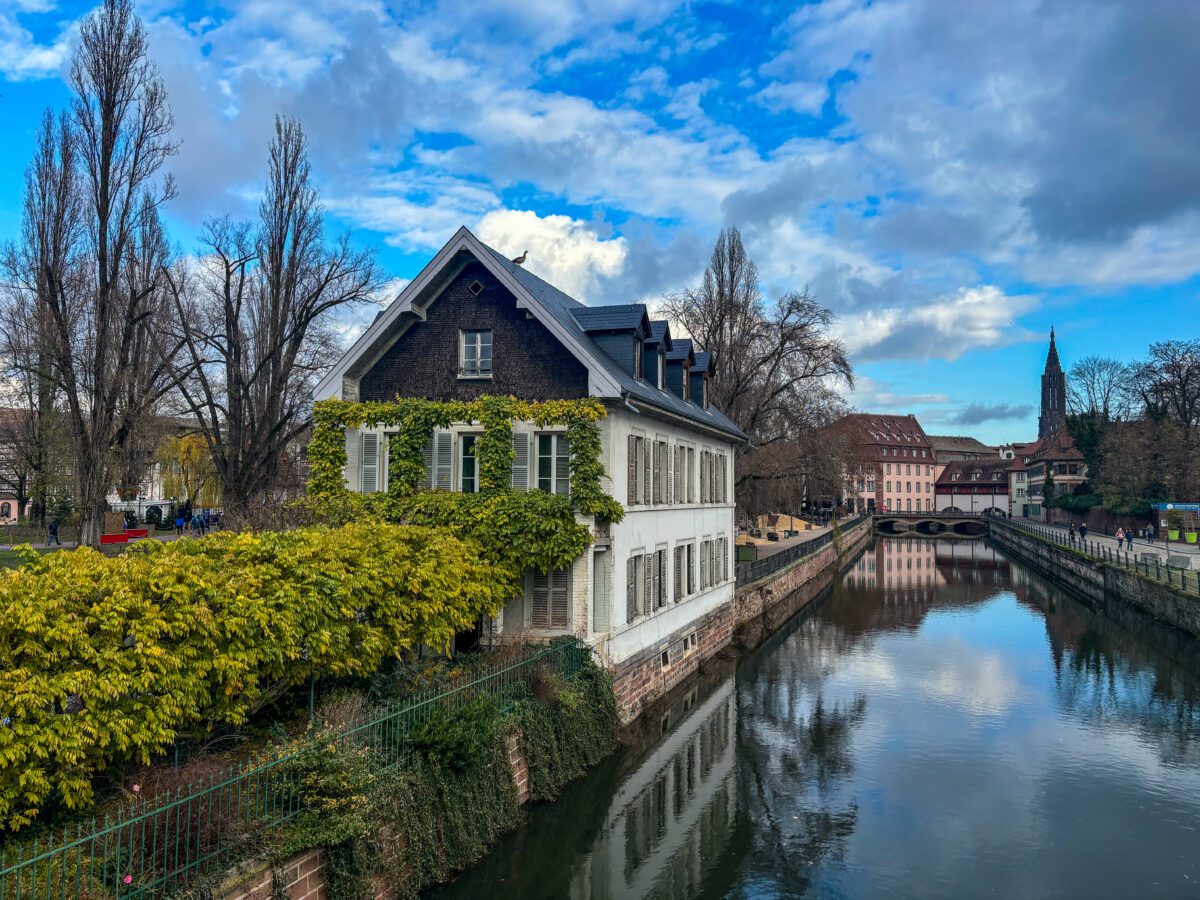
Strasbourg – Au Petit Bois Vert
The cutest little patio overlooking the water in Petit Venis, I loved this spot!
Getting Around Alsace
By Public Transport (Train + Uber)
Getting around Alsace by train and Uber is very doable and what I personally opted for. The main train line runs from Strasbourg south through Colmar to Basel, Switzerland, with stops in Mulhouse along the way. You can also reach Obernai by train from Strasbourg. For the smaller villages like Riquewihr, Ribeauvillé, and Eguisheim, Ubers from Colmar are fast and affordable — around €25–30 per trip. I found this combination gave me plenty of flexibility without the stress of navigating parking in the historic Old Towns.
By Car
Renting a car gives you more flexibility, especially for driving the wine route at your own pace. The main thing to plan for is parking: neither Strasbourg nor Colmar allow cars in their Old Town areas, so you’ll need to park in a garage or stay somewhere just outside. If you’re wine tasting, designate a driver or plan accordingly. The wine route itself is a scenic drive and a car is the easiest way to hop between smaller villages.
By Bike
Alsace has one of the largest networks of cycling paths in France, making it a fantastic region for exploring by bike. The flat stretches of the Rhine Plain and the wine route are particularly well-suited for cycling. Many towns have bike rental options, and cycling between villages through the vineyards is a great experience if the weather cooperates.
Towns of Alsace
Alsace is home to a string of towns ranging from the larger regional capital to tiny wine villages you can explore in an hour. Here’s an overview of the main stops.
Strasbourg
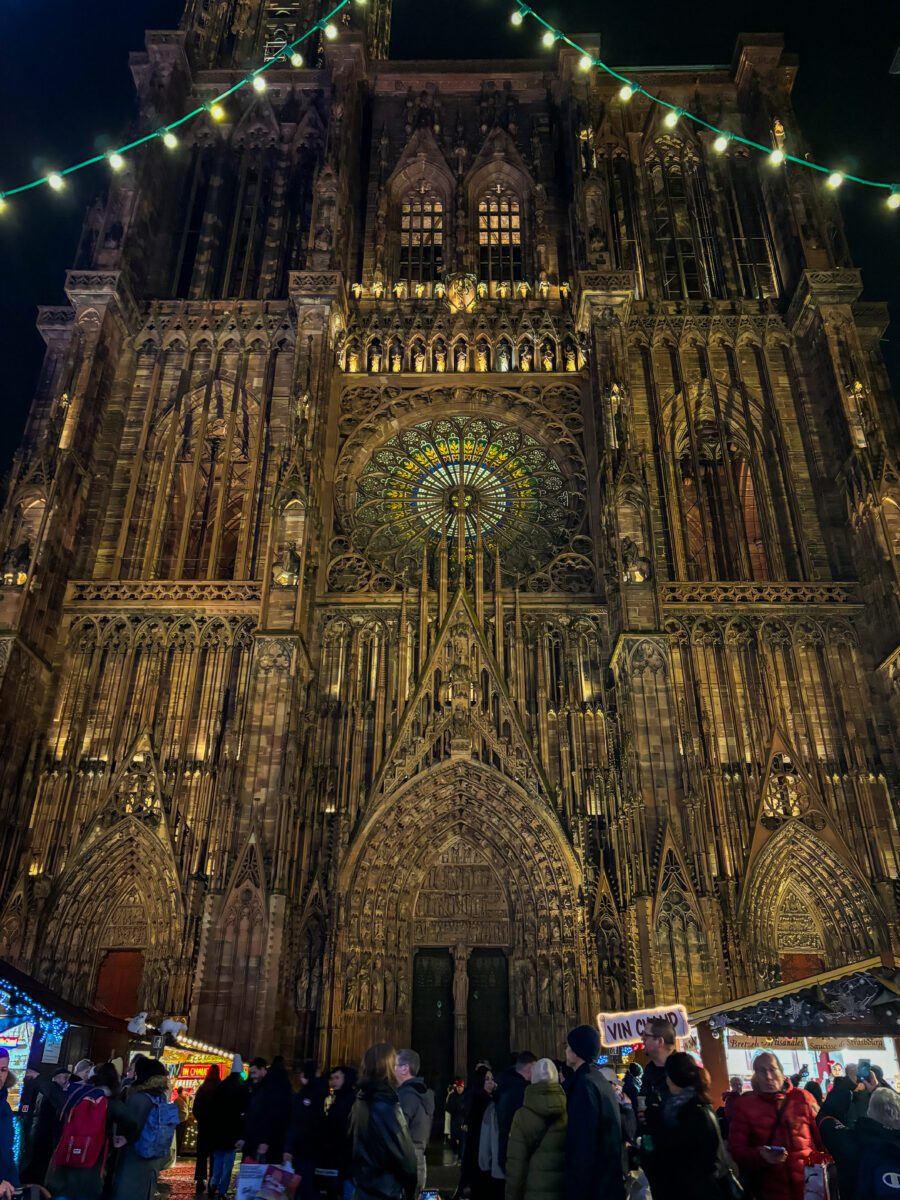
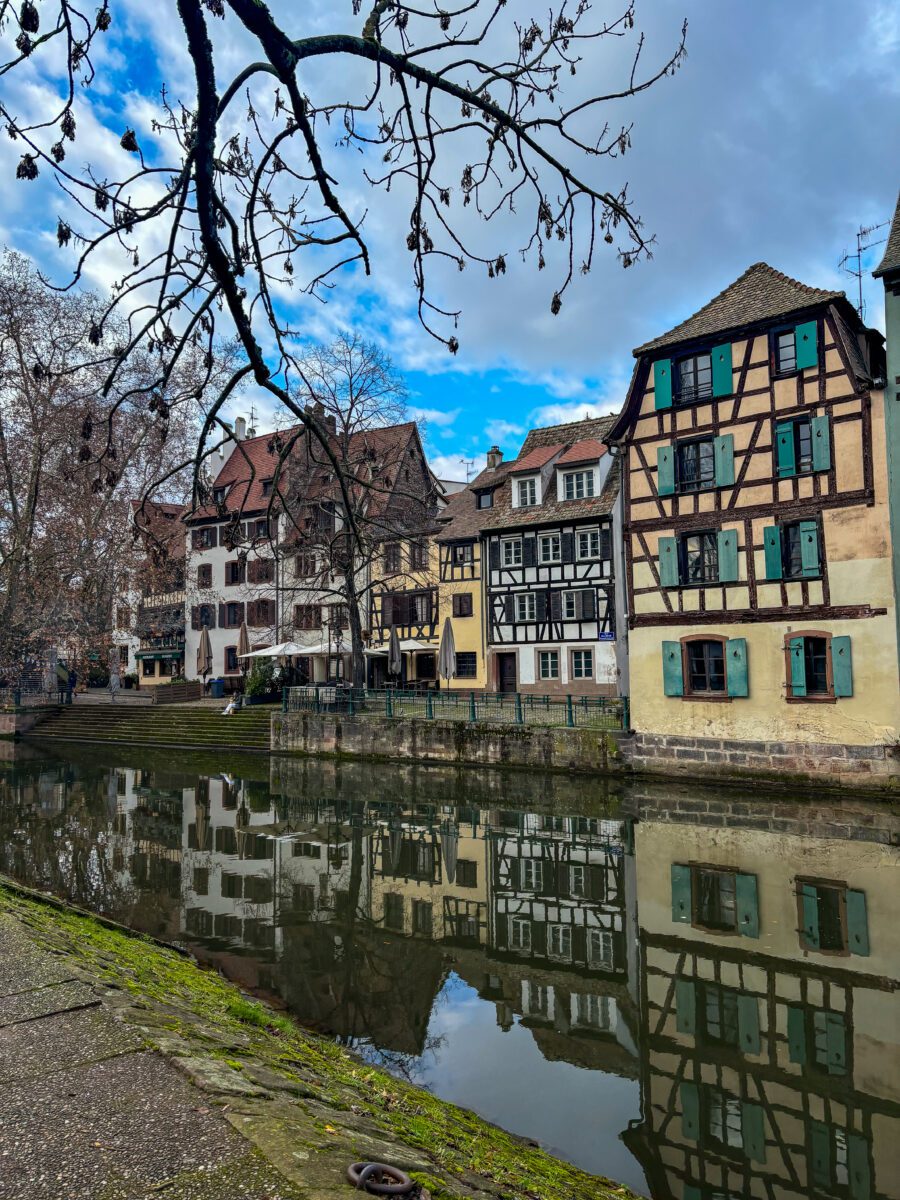
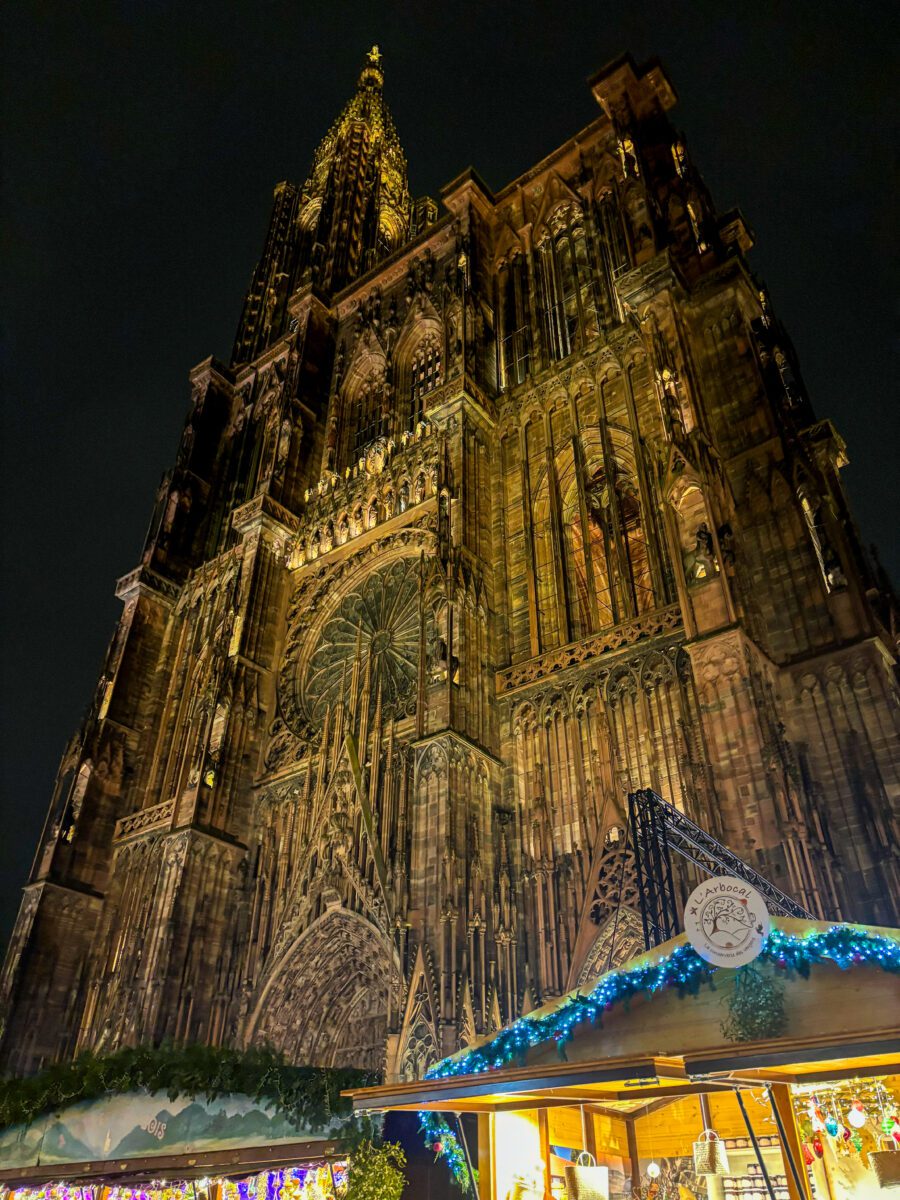
Strasbourg is the capital of the Alsace region and the largest city — and it earns its place as the anchor of any Alsace trip. The Old Town (a UNESCO World Heritage Site) is built on a small island in the Ill River, criss-crossed by canals and filled with half-timbered houses, winding cobblestone streets, and stunning Gothic architecture. The Cathedral of Notre-Dame de Strasbourg is the undeniable highlight — the building is genuinely breathtaking, with intricate pink sandstone facade and an astronomical clock inside worth seeing.
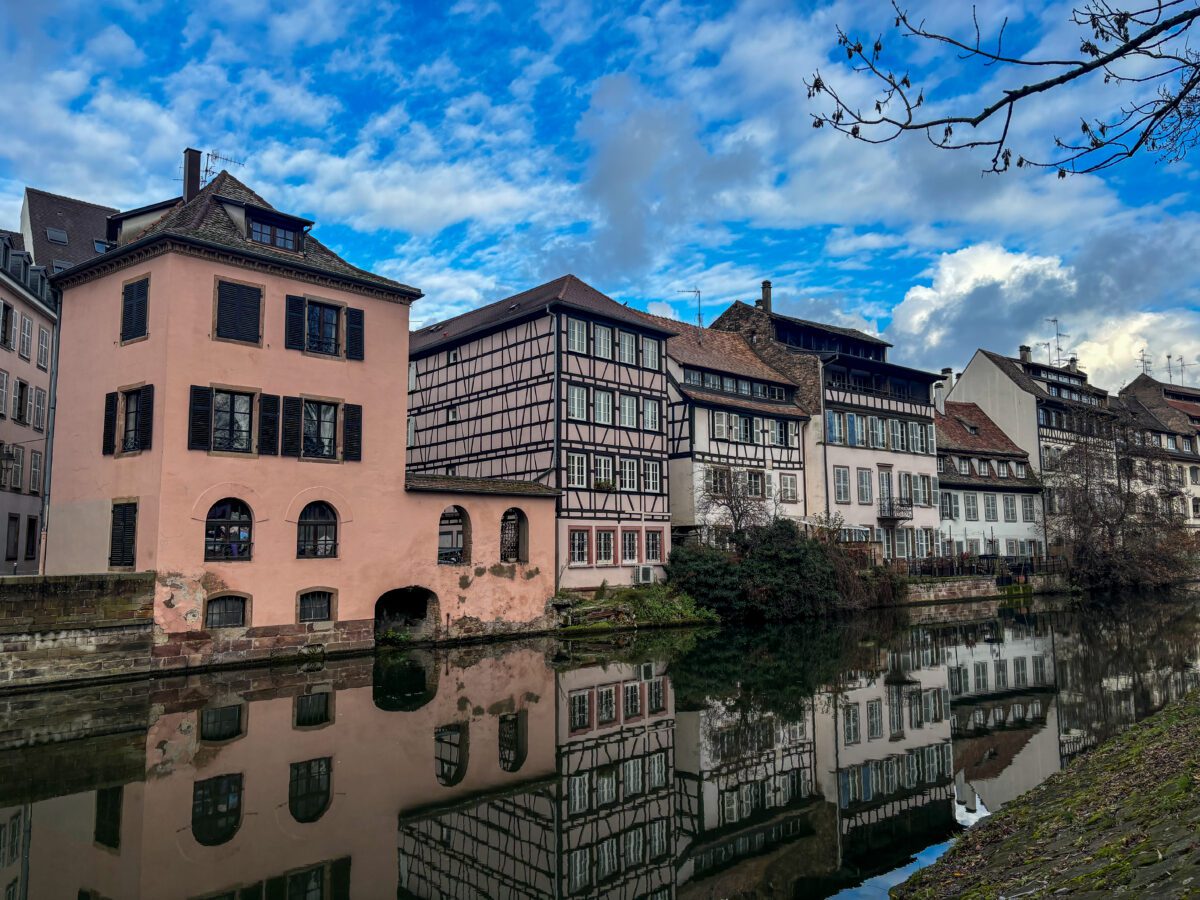
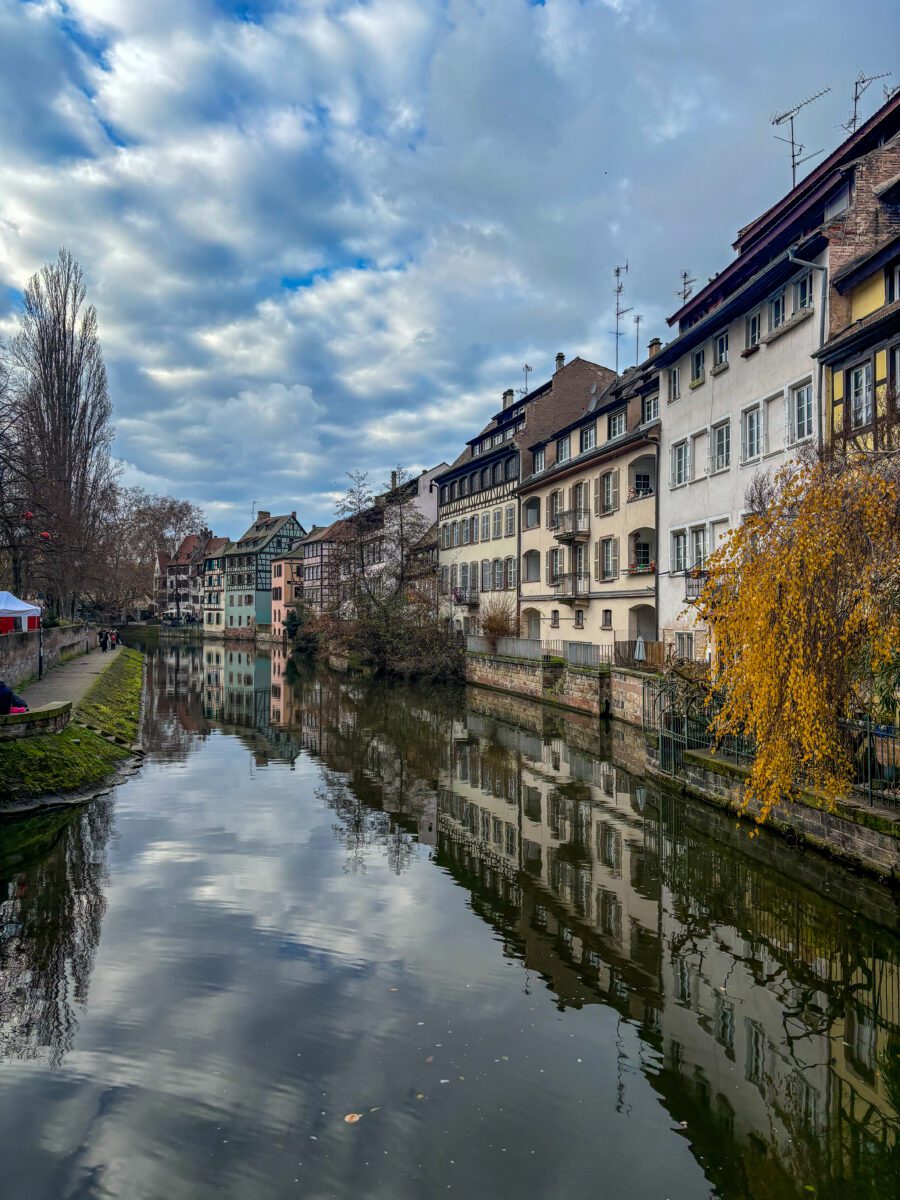
The most photogenic neighborhood is La Petite France, a web of canals, flower-draped bridges, and centuries-old tanner houses in the southwest corner of the island. Budget at least a full day for Strasbourg, and two if you want a leisurely pace. It also makes a great base for day-tripping to Obernai and the northern wine route towns.

Colmar
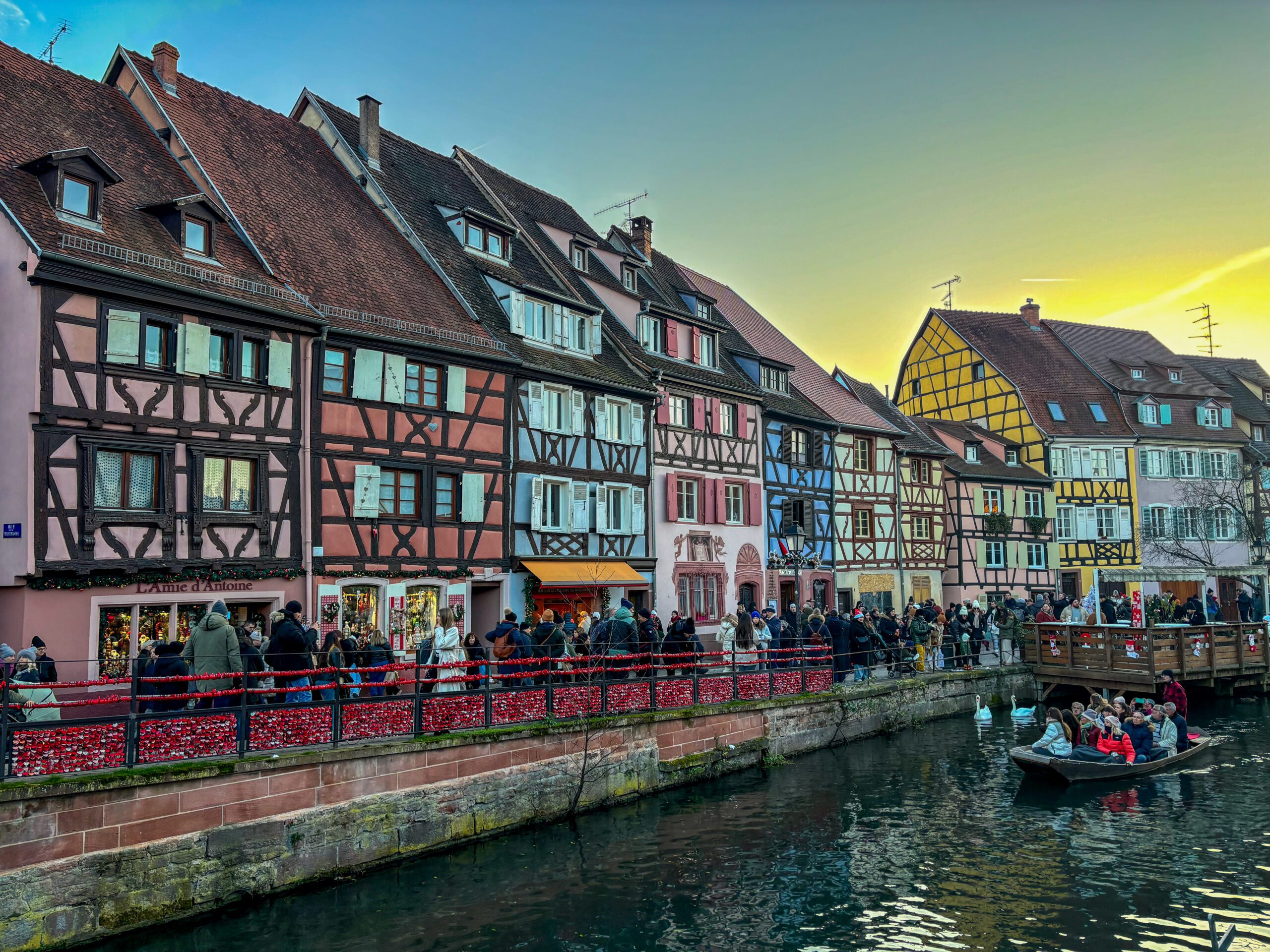
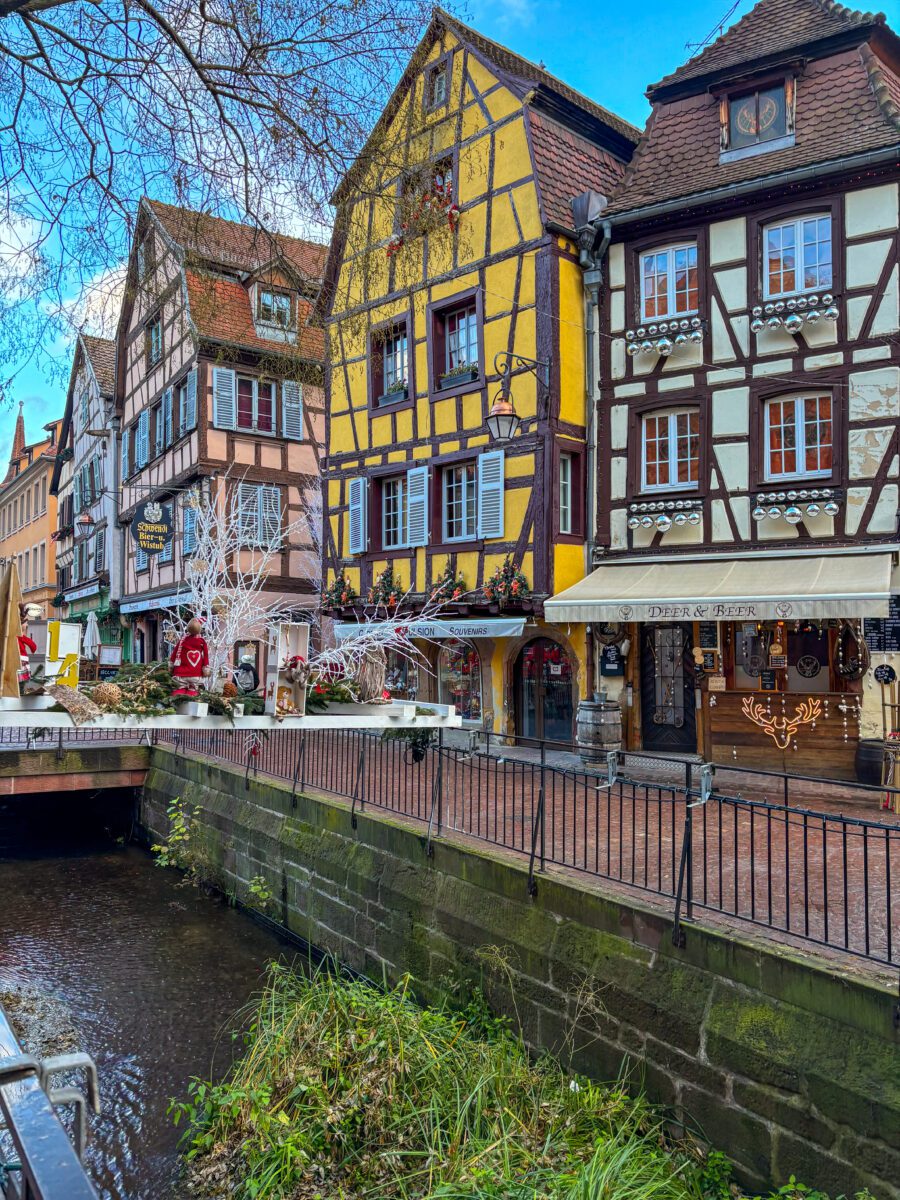
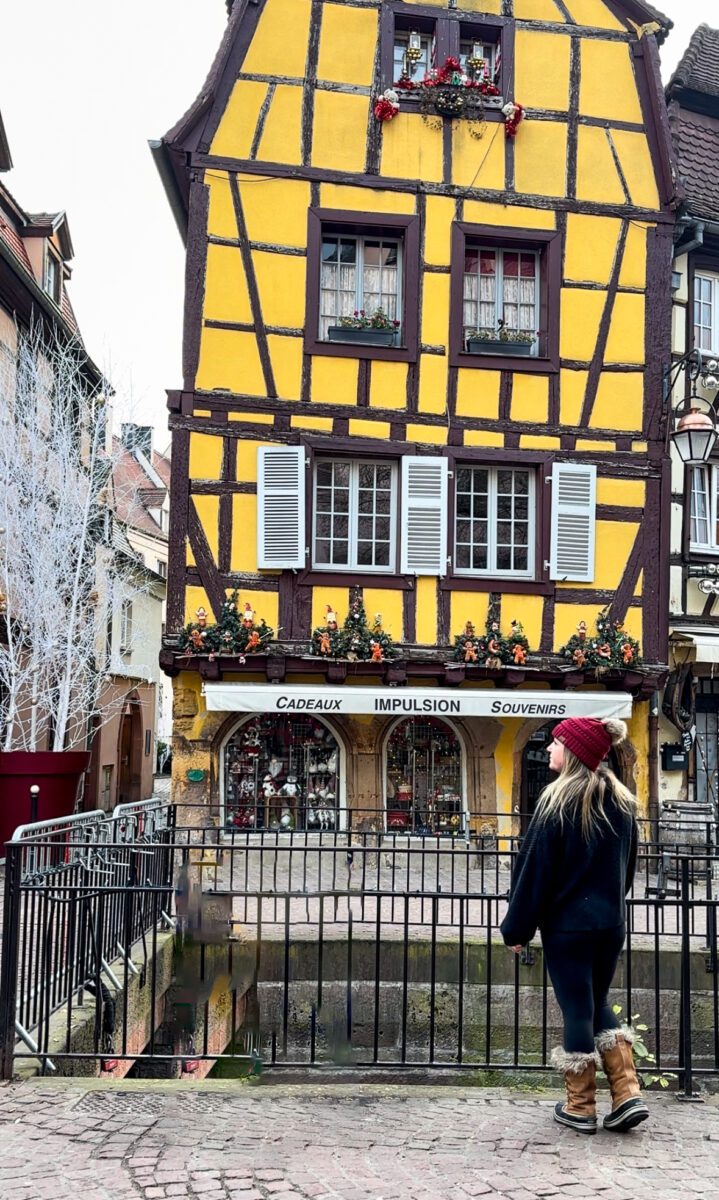
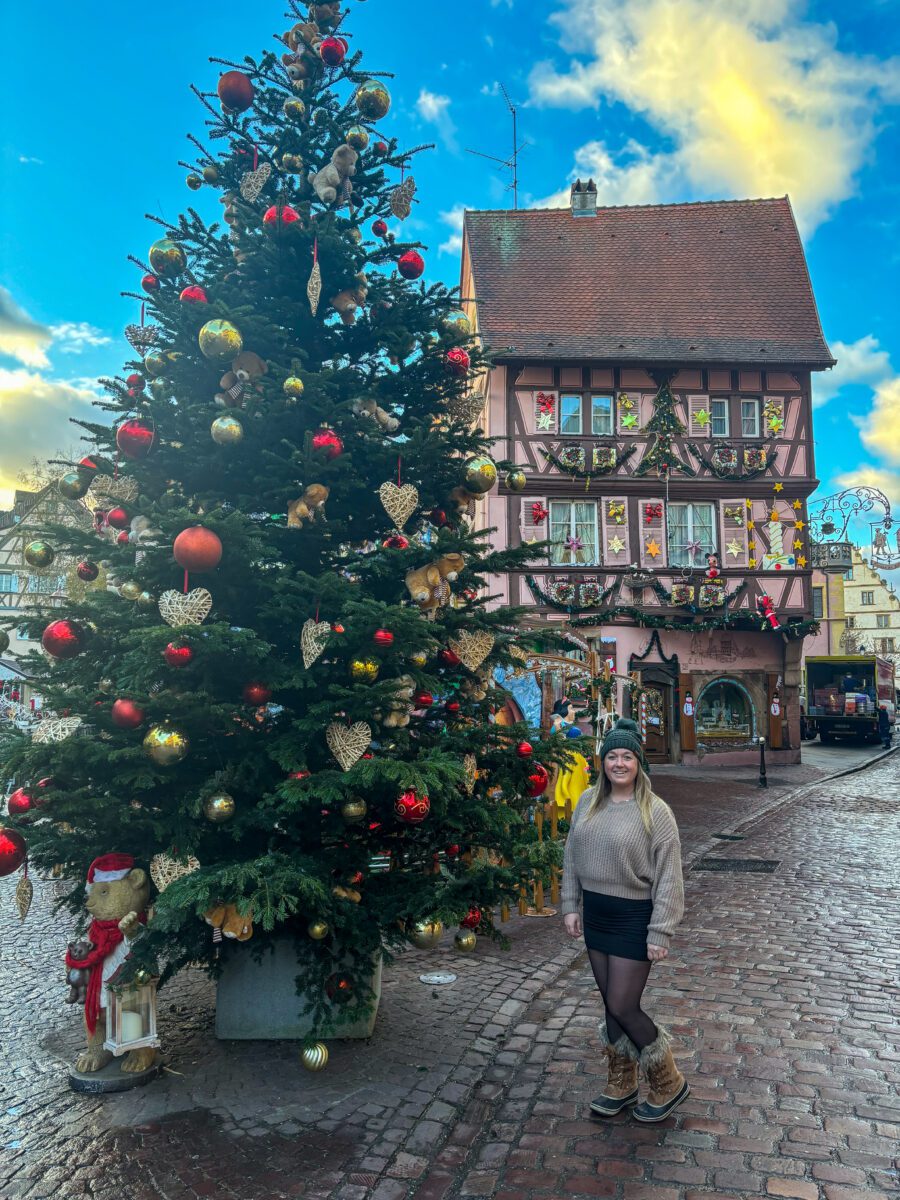
Colmar is the most celebrated of Alsace’s small towns and is genuinely stunning — the pastel-colored half-timbered houses, canal-lined streets, and window boxes overflowing with flowers make it feel almost unreal. The Little Venice area (Petite Venise) is the most photographed spot in the region, where gondola-style boats drift past colorful houses reflected in the water. The town is also conveniently central for exploring the surrounding wine villages.
Colmar is small and easily explored in a day, but it’s worth staying at least one night so you can enjoy the streets in the early morning and evening when the day-trippers have cleared out.
Riquewihr
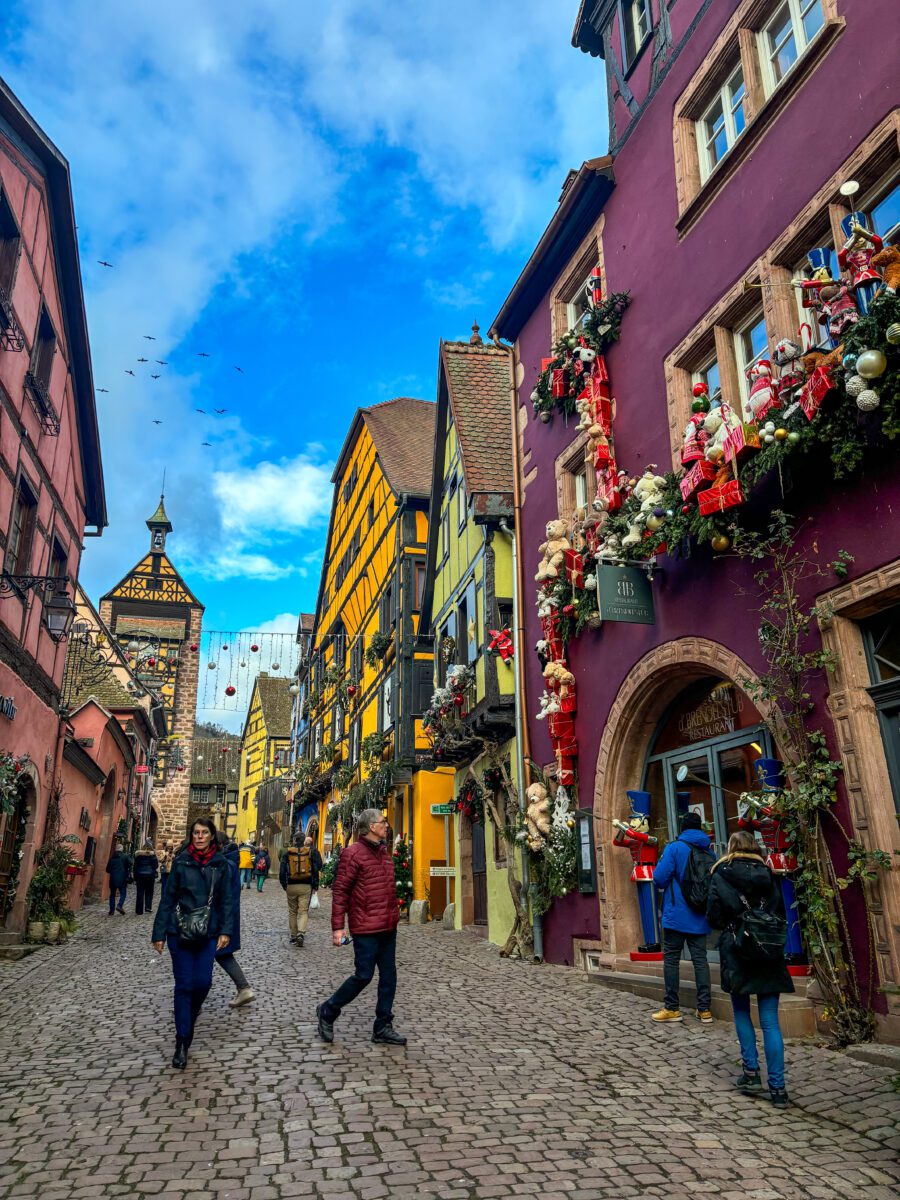
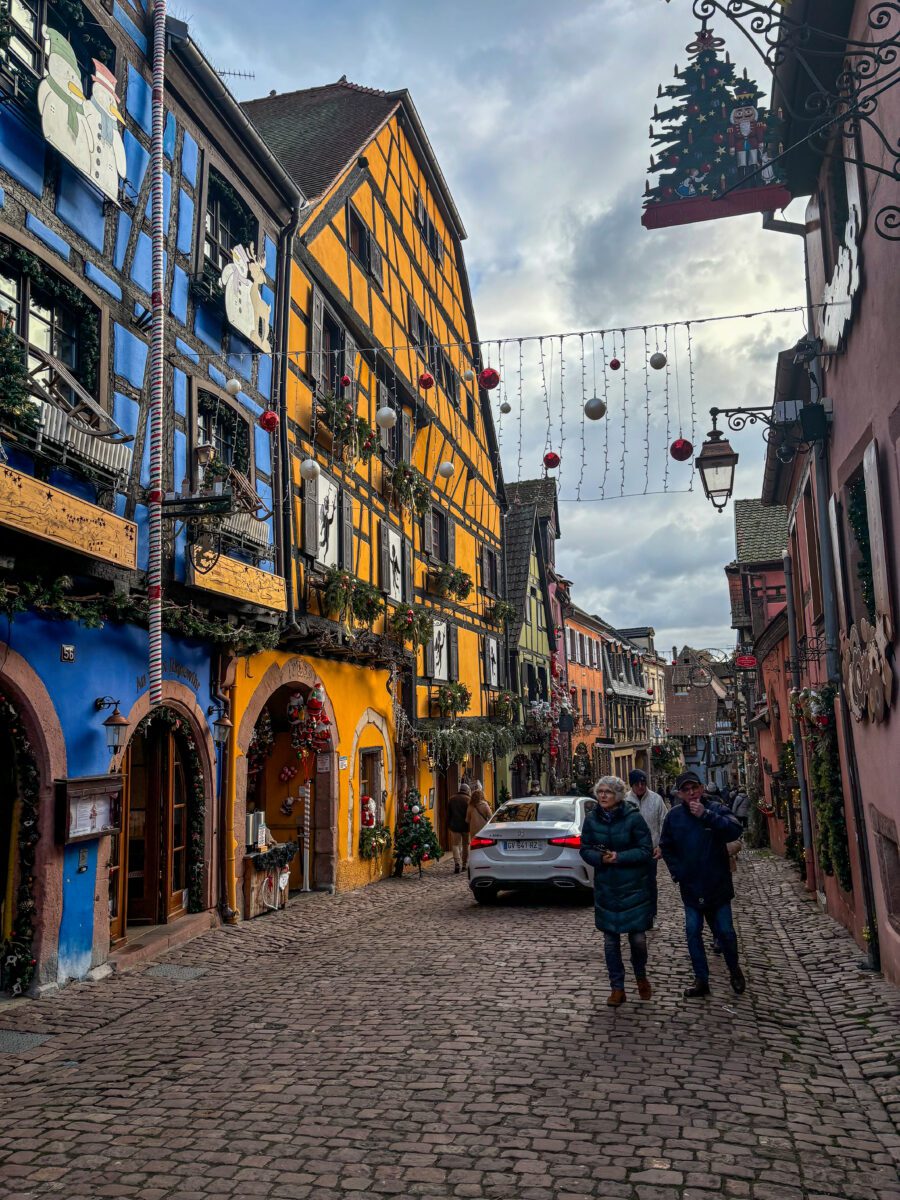
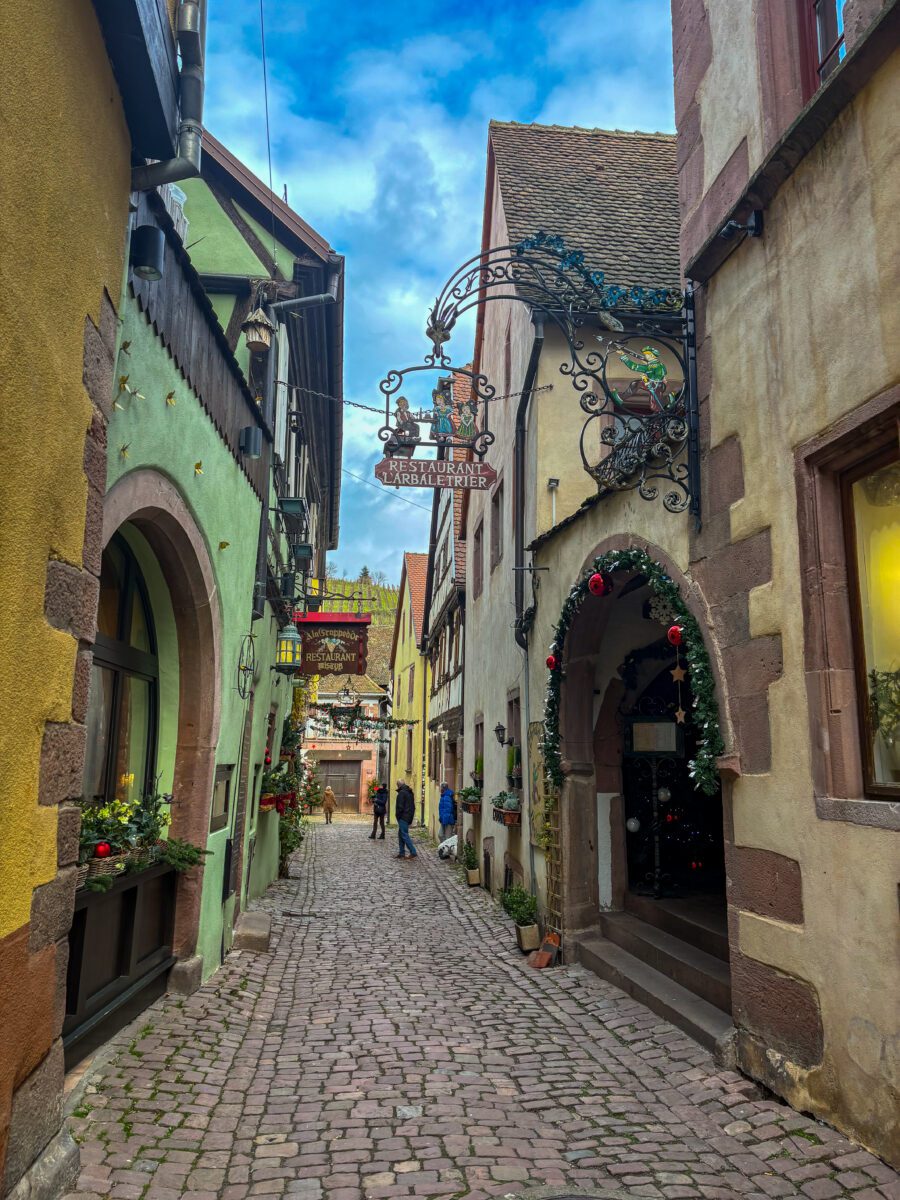
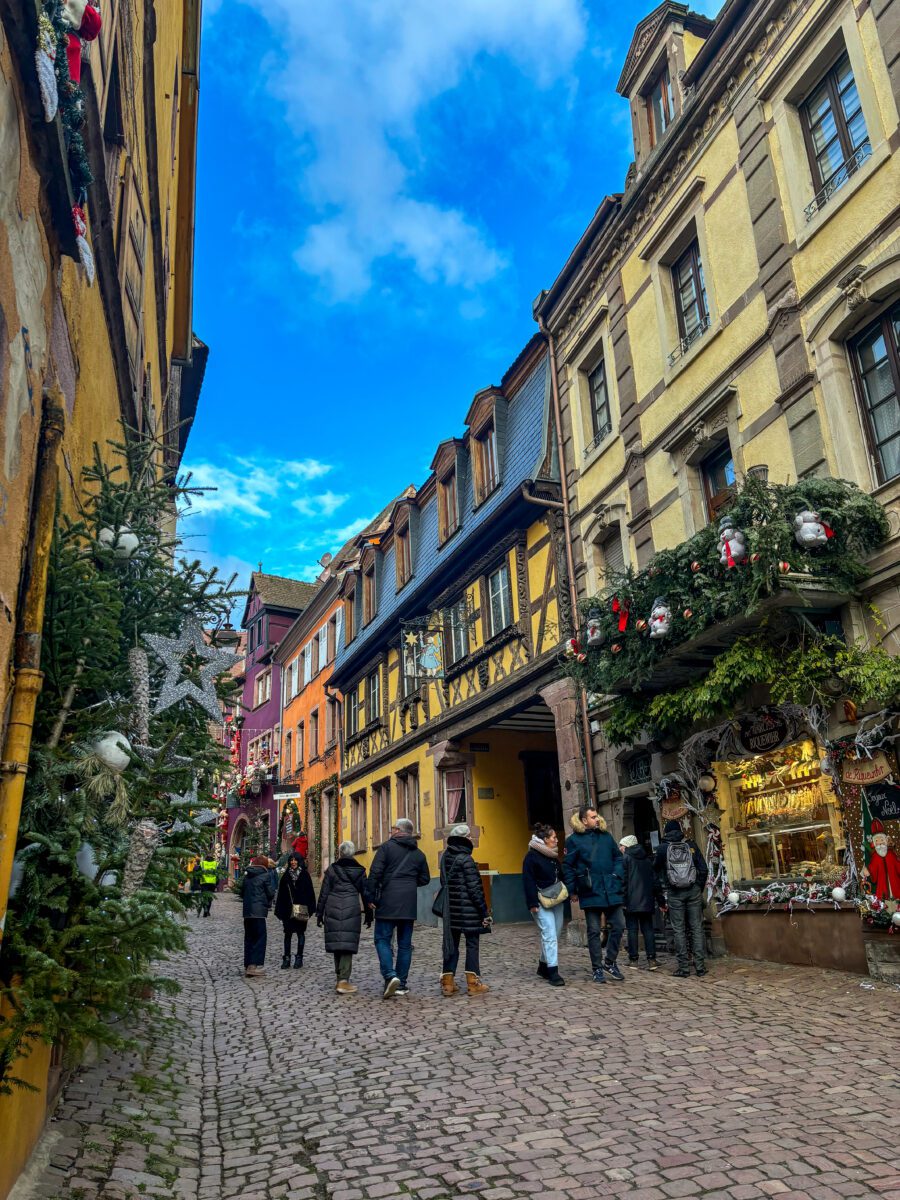
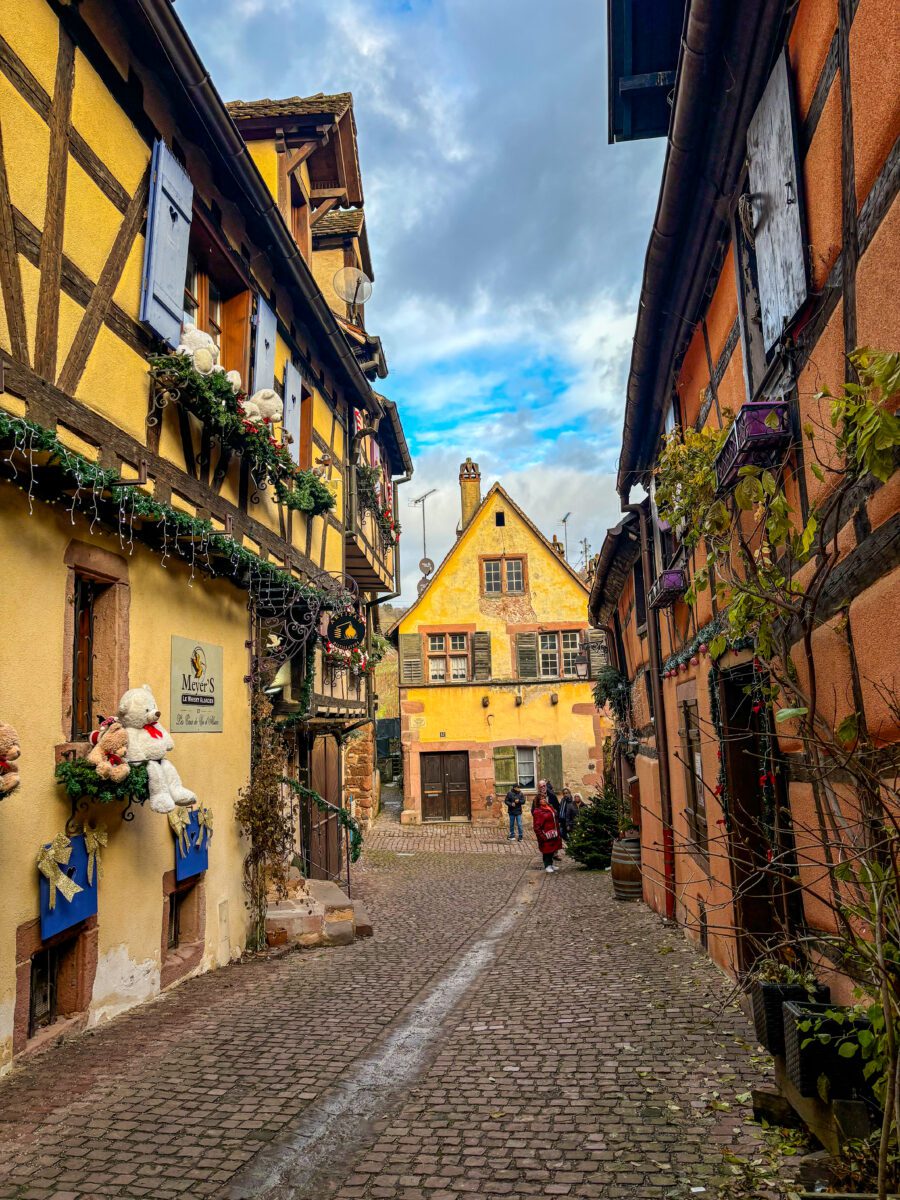
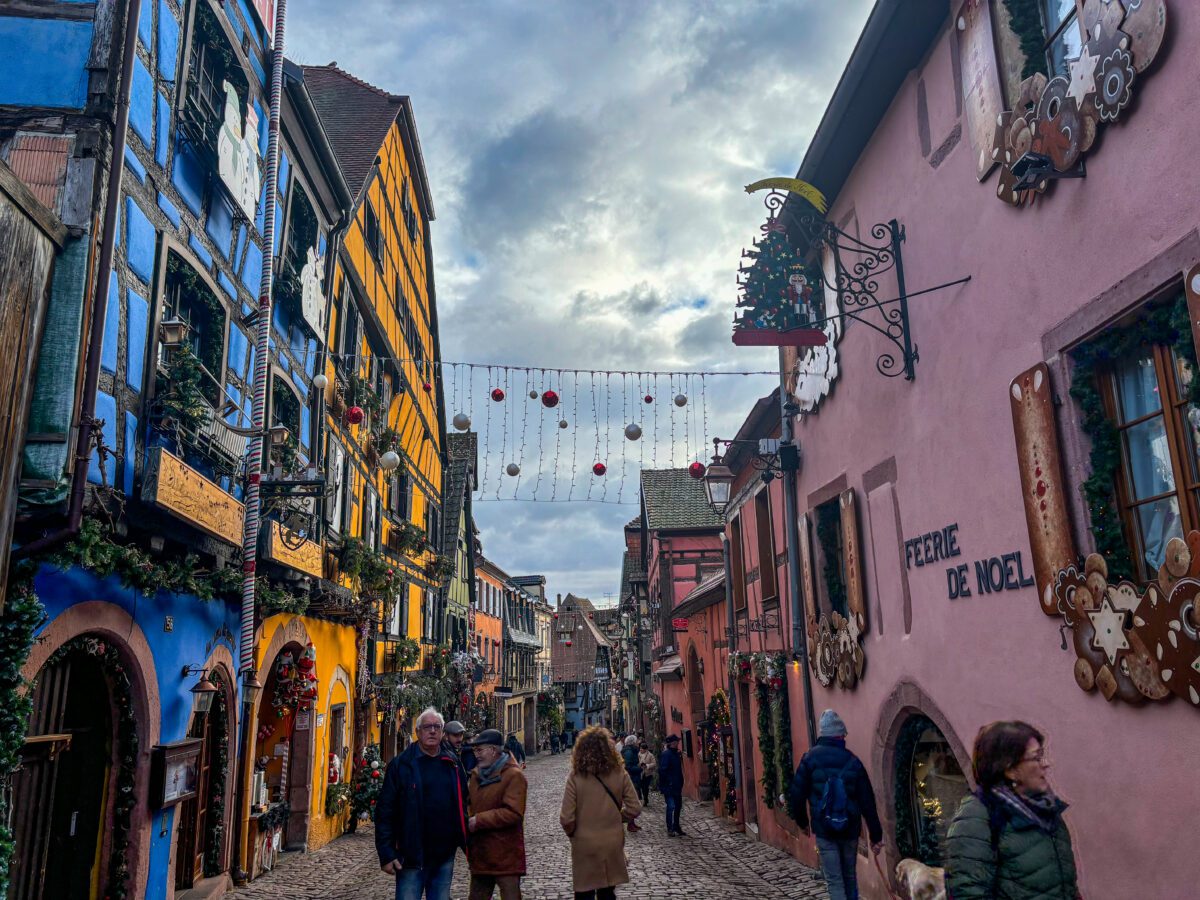
Riquewihr is a tiny medieval wine town that many claim was the real-life inspiration for Belle’s village in Disney’s Beauty and the Beast — and walking through it, you can see why. The main street is lined with vibrantly colored half-timbered houses draped in vines, backed by vineyard hillsides. It’s small enough to explore in a couple of hours and is best combined with a stop in nearby Ribeauvillé. Come before the tour groups arrive — morning is best.
Ribeauvillé
Just 10 minutes from Riquewihr, Ribeauvillé is another charming medieval town with beautiful half-timbered houses and three ruined castles perched on the hills above town. It feels slightly less touristy than Riquewihr and is worth a stop for a wander and a glass of wine. The hike up to the Three Castles rewards with great views over the vineyards below.
Eguisheim
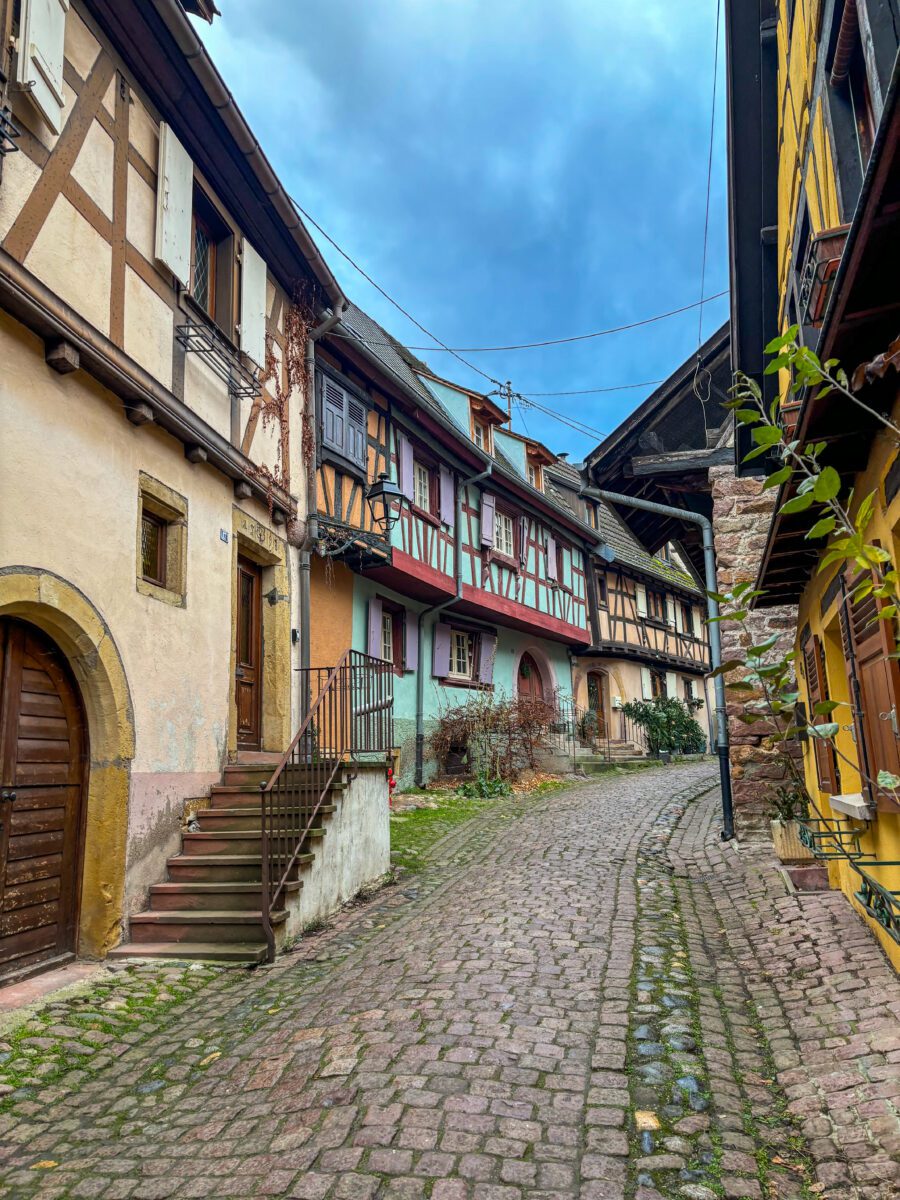
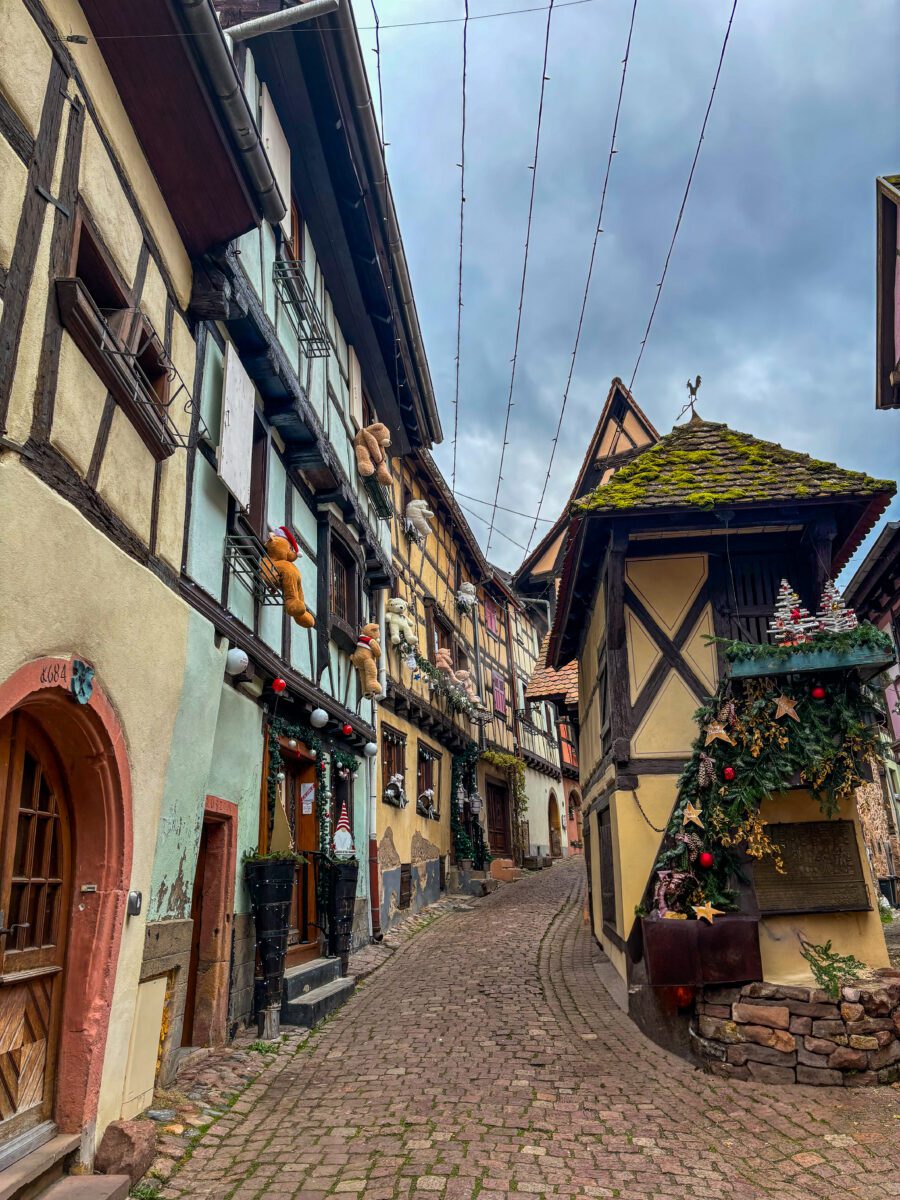
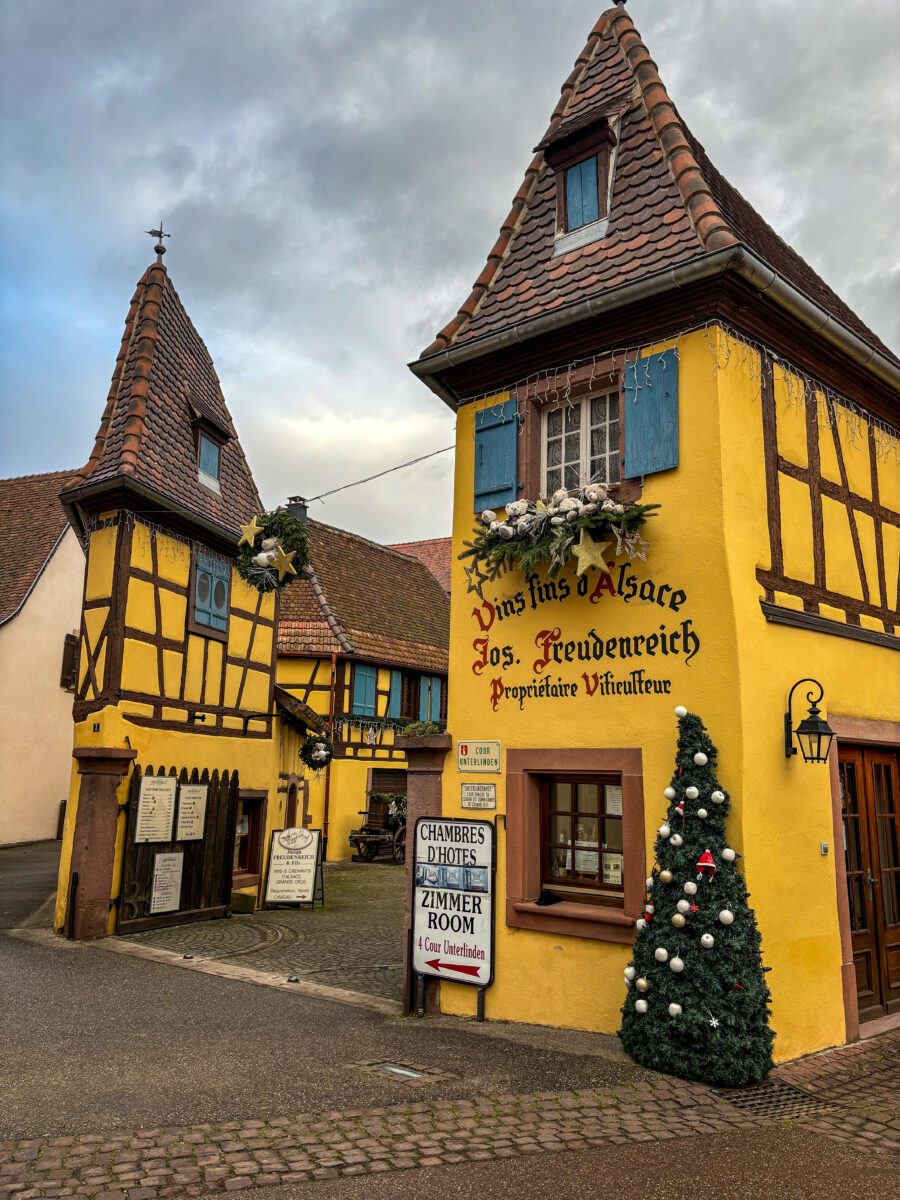
Eguisheim is a small circular medieval village just 12 minutes from Colmar and one of the most charming in the region. The village is built in concentric rings around a central courtyard, and wandering its narrow lanes past colorful flower-filled houses is a lovely way to spend a morning. It’s worth visiting even without a specific agenda — just wander.
Kaysersberg
Kaysersberg was voted the “Favorite Village of the French” in 2017 and it’s easy to see why. The town has a beautifully preserved medieval center with a fortified bridge, a ruined castle overlooking the valley, and excellent wine producers. It’s a bit less visited than Riquewihr and feels more authentically local as a result. Budget a couple of hours for a wander and a tasting.
Obernai
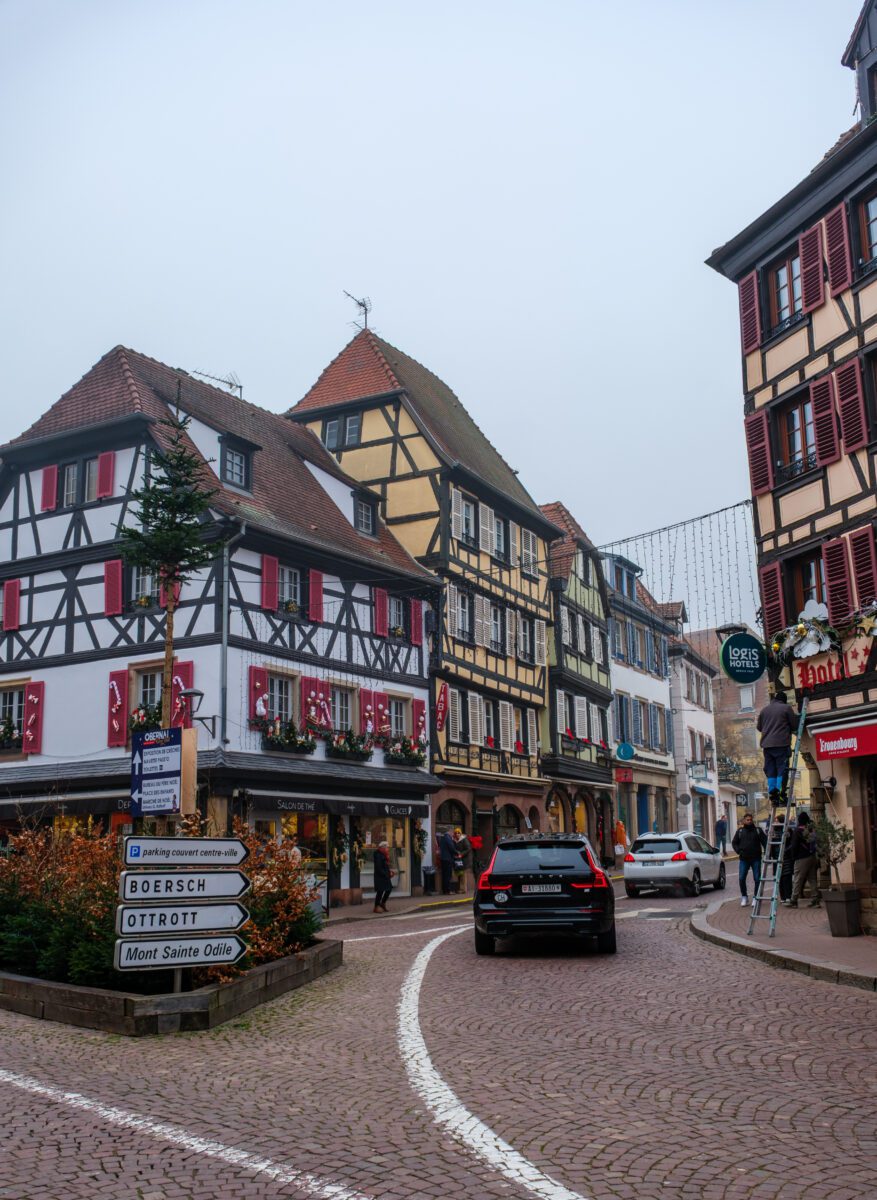
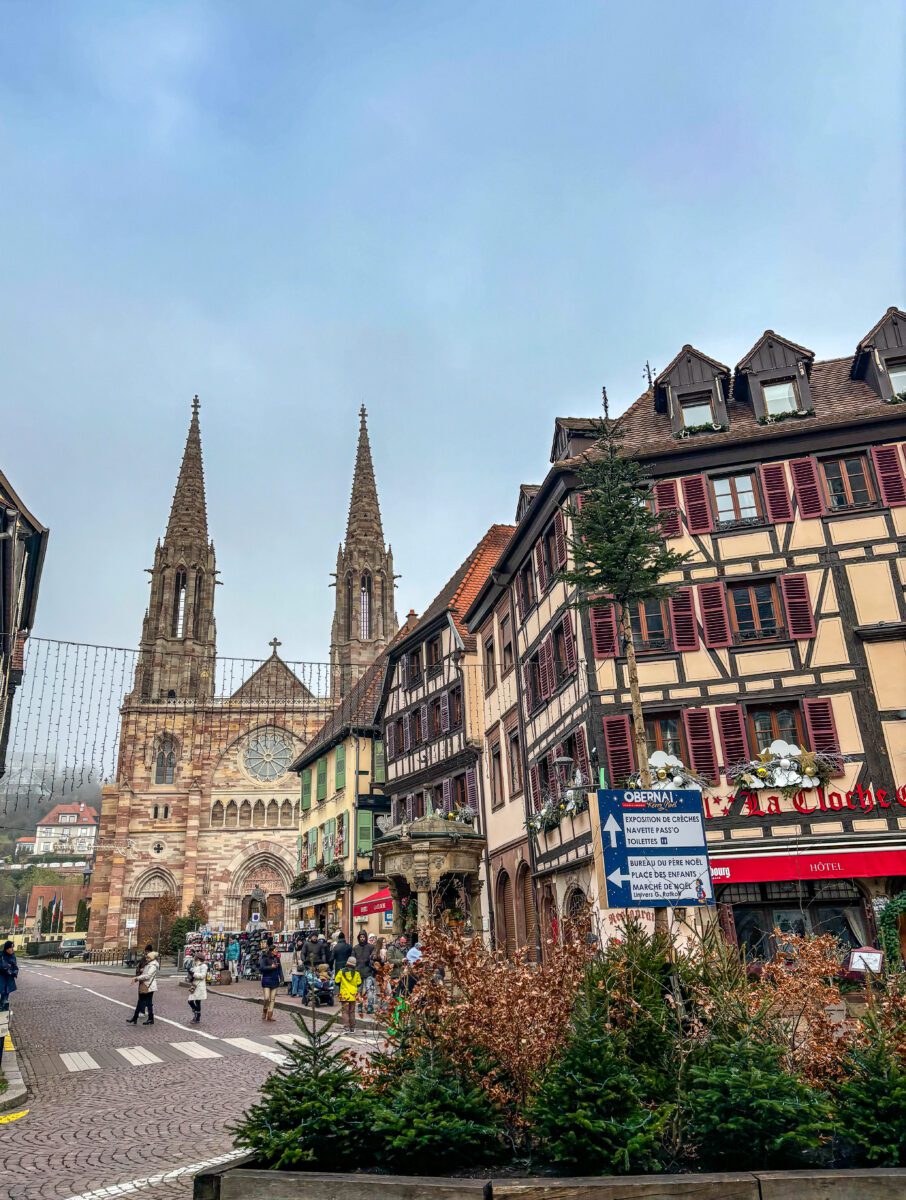
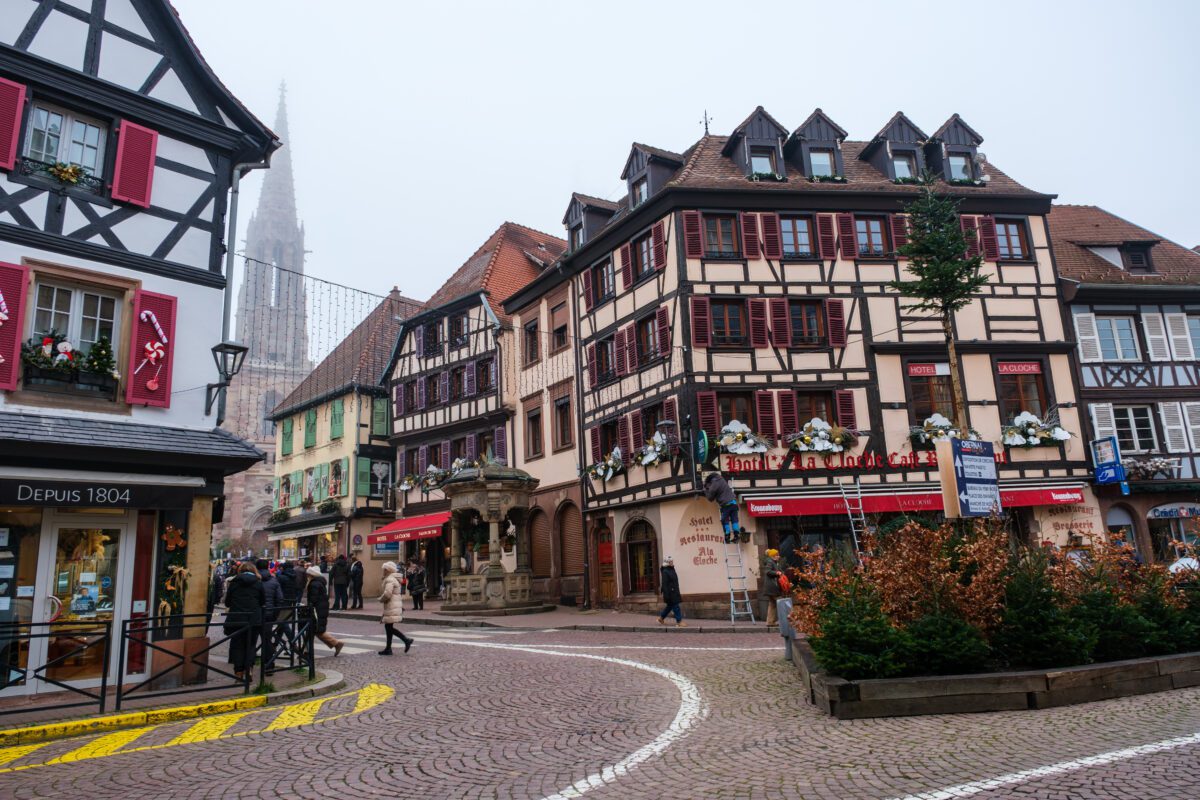
Obernai is the largest of the smaller Alsace towns and has a lively, local feel that sets it apart from some of the more heavily touristed villages. The two main squares are genuinely picturesque and the overall vibe is energetic — this is a town where locals actually hang out, not just tourists. It’s about 25 minutes from Strasbourg by car or 40 minutes by train, making it easy to combine with a Strasbourg base.
Where to Stay in Alsace
The two best bases in Alsace are Strasbourg and Colmar. If you have 4+ nights, splitting your time between both is ideal. Strasbourg has more accommodation options across all price ranges. Colmar is more central for the wine villages but has fewer (and often pricier) options, especially in the Old Town.
Where to Stay in Colmar
I stayed right in the heart of Colmar’s Old Town at Le Colombier and loved it. They have a main hotel and a suites building across the street — staying at either gives you access to all the hotel amenities (breakfast, outdoor patio, bar). It’s right in the Little Venice area, which is perfect for early morning and late evening exploring.
Where to Stay in Strasbourg
For Strasbourg, I’d stay in the Old Town — this is where all the highlights are and it’s easy to walk everywhere. My top pick is Pavillon Regent Petite France, a stunning hotel right along the canals in La Petite France. If you’re looking for something closer to the cathedral and a bit easier on the budget, Hôtel Gutenberg is a solid option in a great location.
Best Things to Do in Alsace
Drive (or Cycle) the Route des Vins
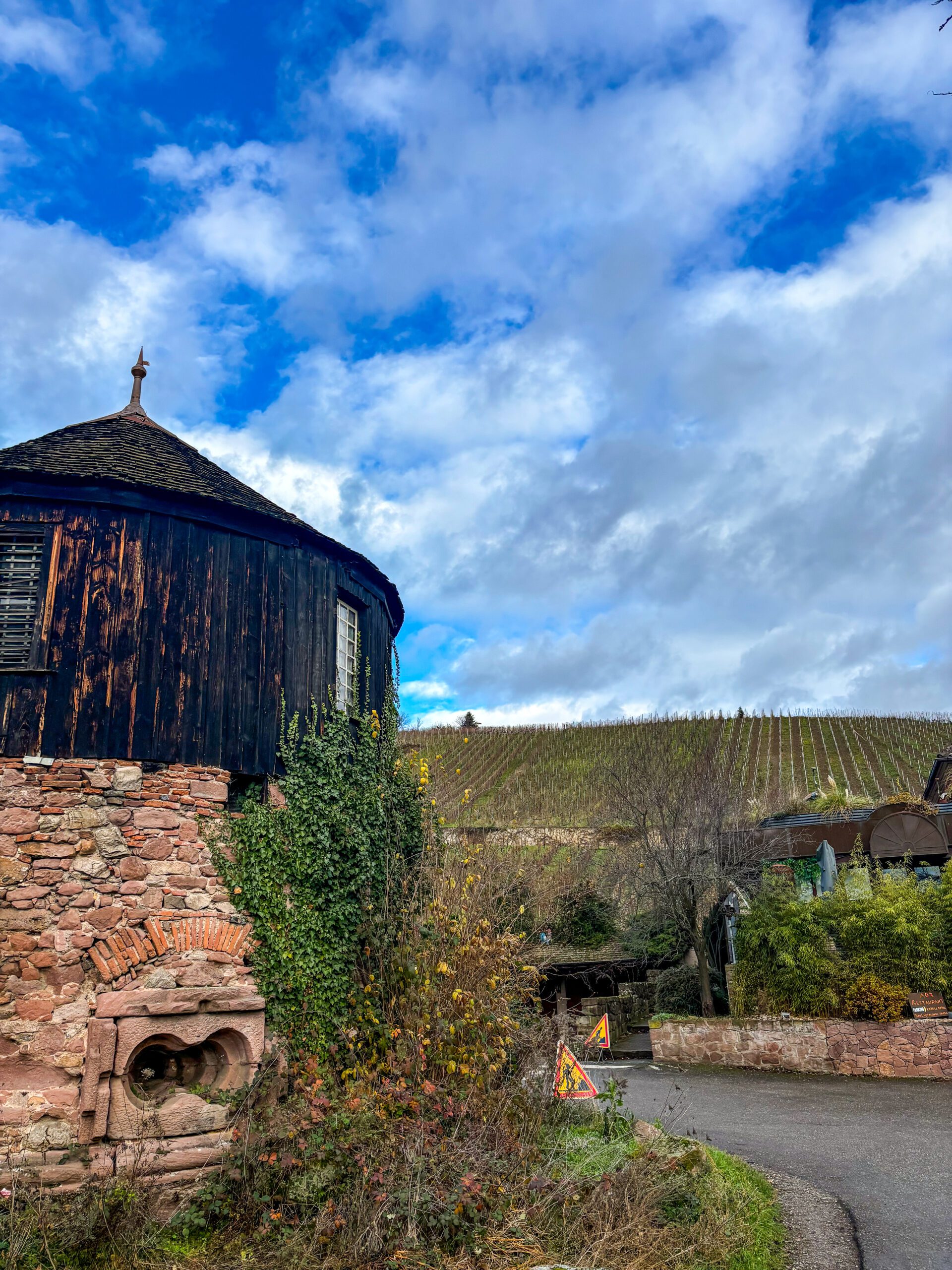
The Alsace Wine Route (Route des Vins d’Alsace) is France’s oldest wine route, inaugurated in 1953, and stretches roughly 170km from Marlenheim in the north to Thann in the south. The route winds through over 70 villages and past some of the most scenic vineyard landscapes in Europe. You can drive the whole thing in a few days, dip in for a day trip from Colmar or Strasbourg, or cycle sections of it on the region’s excellent network of bike paths. Either way, stopping at local cellars for tastings along the way is the whole point — most are open to visitors and many offer free tastings.
Explore Strasbourg’s Old Town
Strasbourg’s UNESCO-listed Grande Île (the historic island center) warrants serious time. Beyond the cathedral, the streets around it are full of stunning medieval architecture, and La Petite France neighborhood is one of the prettiest urban areas in France. Allow a full day at minimum — there’s a lot to wander through, and it rewards slow exploration.
Wander Colmar’s Little Venice
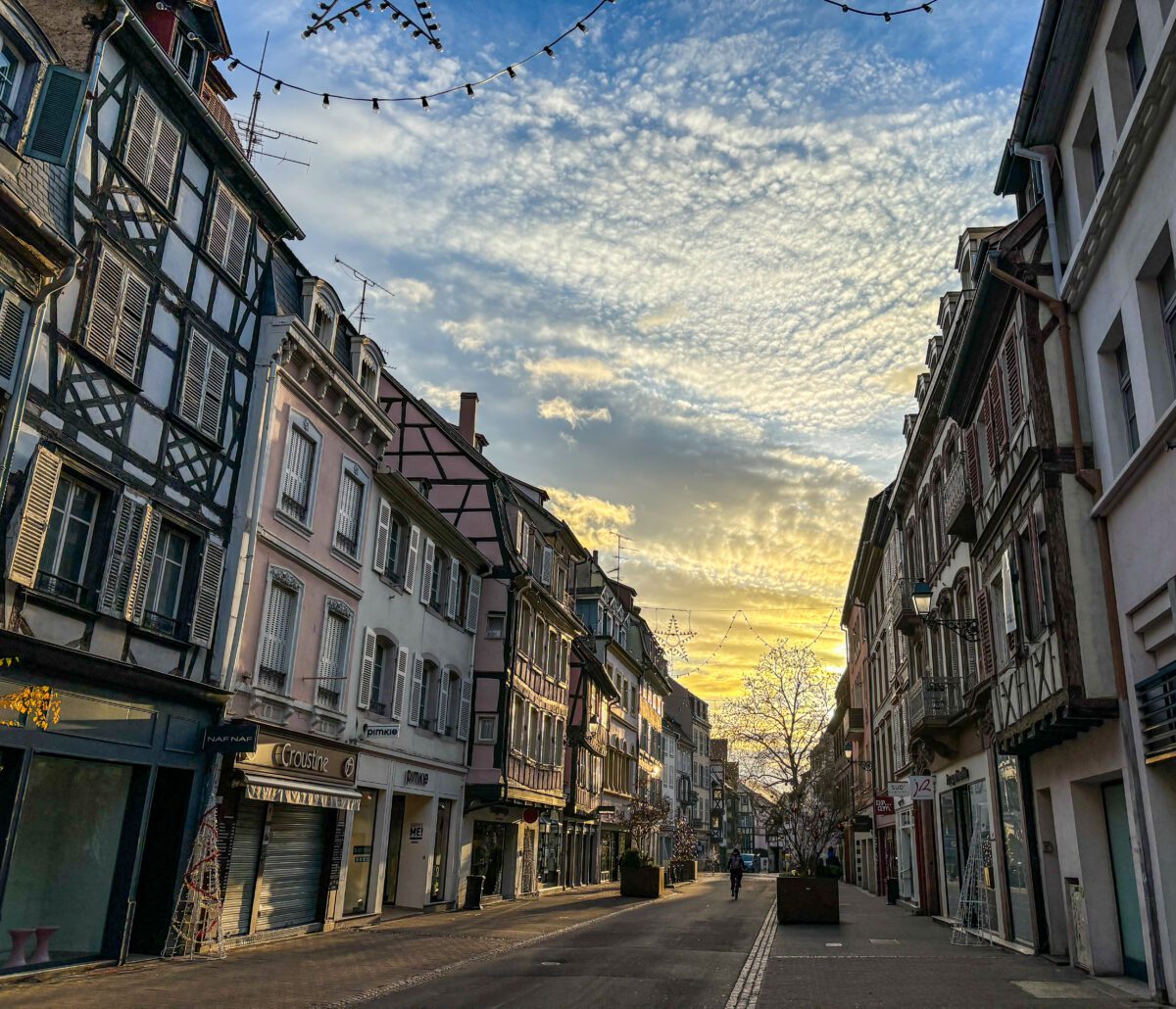
The canals and colorful houses of Colmar’s Petite Venise (Little Venice) area are genuinely one of the most beautiful urban landscapes in France. Go in the morning before the crowds, and again at sunset — both are stunning in different ways. It’s easily walkable from the rest of Colmar’s Old Town.
Visit Haut-Koenigsbourg Castle
Perched high above the vineyards between Sélestat and Ribeauvillé, Haut-Koenigsbourg is a beautifully preserved medieval castle with sweeping views over the Rhine Plain and, on clear days, the Black Forest in Germany. It’s open year-round (closed Christmas and New Year) and is a worthwhile half-day trip from Colmar or Strasbourg.
Hike in the Vosges Mountains
The Massif des Vosges forms the western edge of Alsace and offers excellent hiking through forests, past mountain lakes, and up to panoramic summits. The Grand Ballon is the highest peak in the Vosges at 1,424m and rewards the climb with views in every direction. Spring and autumn are the best seasons for hiking here.
Do a Wine Tasting
Alsace produces some of France’s most distinctive whites — Riesling, Gewurztraminer, Pinot Gris, and Muscat are the headline varieties, along with a small amount of Pinot Noir. Most of the small family-run wineries along the wine route welcome visitors and offer tastings, often for free. Look for signs saying “Dégustation” as you drive or cycle through the villages — it’s one of the best (and most affordable) things to do in the region.
Eat All the Alsatian Food
Alsatian cuisine is hearty, warming, and genuinely excellent — a mashup of French and German culinary traditions that works better than it should. Don’t leave without trying:
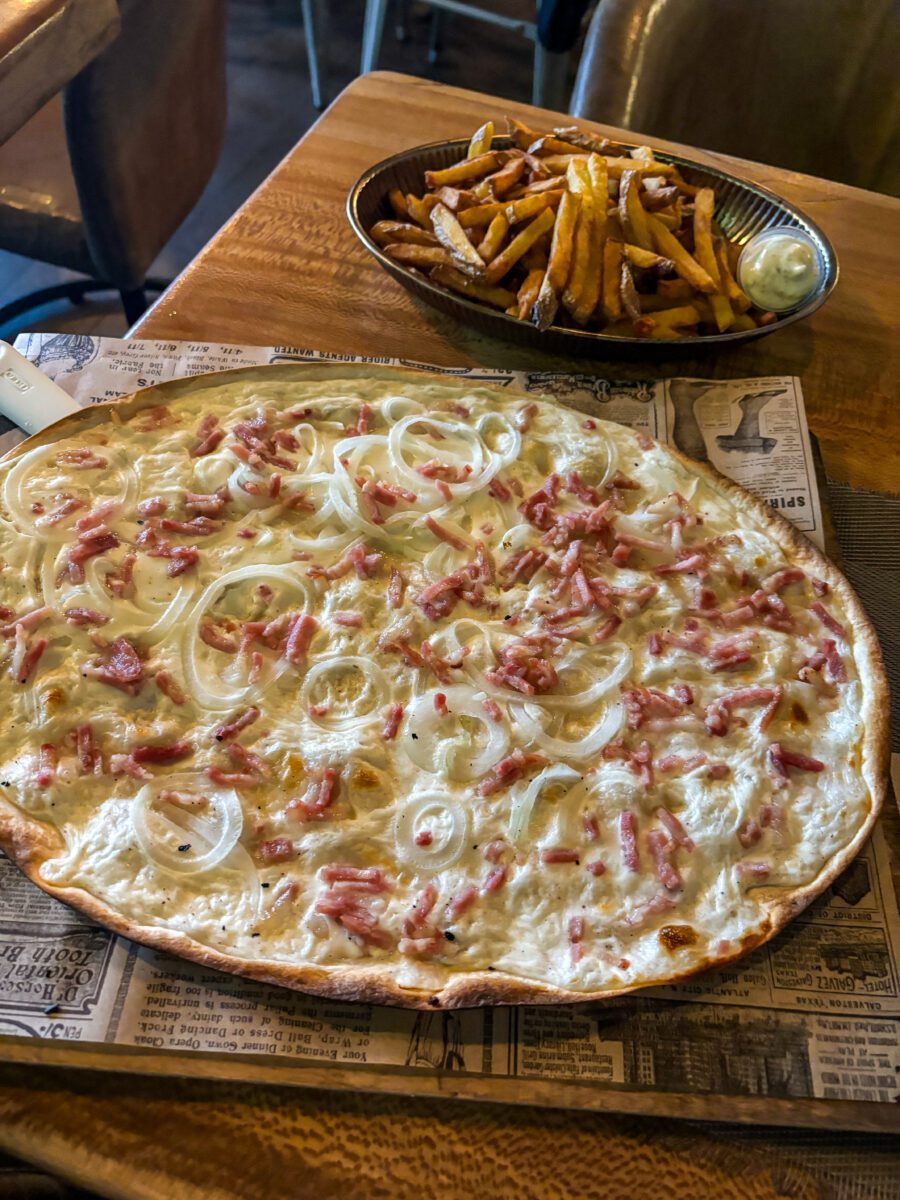
- Tarte Flambée — thin flatbread with crème fraîche, onions, and lardons. Get multiple.
- Choucroute Garnie — sauerkraut topped with various sausages and meats. The Alsatian version is more refined than you’d expect.
- Baeckeoffe — a slow-cooked meat and potato casserole, a classic winter warmer.
- Munster Cheese — the region’s famous strong washed-rind cheese.
- Kougelhopf — a traditional Alsatian brioche cake baked in a distinctive ring mold.
- Bredele — spiced Christmas biscuits in various shapes and flavors (available year-round in specialty shops).
For specific restaurant picks, I’ve put together full guides to my favorite spots in the region: 12 Best Restaurants in Strasbourg and 10 Best Restaurants in Colmar.
Getting to Alsace
By Air
The two closest airports are Strasbourg Airport (SXB) and EuroAirport Basel-Mulhouse-Freiburg (BSL/MLH) — both are roughly equidistant from Colmar, the most central base for the region. Strasbourg airport has direct connections to major European cities. Basel EuroAirport is slightly larger with more route options and serves Strasbourg, Colmar, and the southern wine route equally well.
By Train
Strasbourg is extremely well connected by train. The TGV from Paris to Strasbourg takes just under 2 hours, making it an easy direct connection from CDG. From Strasbourg you can take regional trains south to Colmar (30 minutes) and Mulhouse. Basel is also on the same line, making it easy to combine Alsace with a stop in Switzerland. The train is genuinely the easiest way to get into the region.
When to Visit Alsace
Spring (May–June) — Best Overall
Late spring is a great time to visit Alsace. The vineyards are lush and green, the flower boxes on every house are in full bloom, temperatures are mild and pleasant, and crowds haven’t peaked yet. May and June hit a sweet spot: warm enough for full days outdoors, quiet enough to actually enjoy the villages. This is the season I’d prioritize if you have flexibility.
Summer (July–August) — Busiest
Summer is peak season. The weather is warm, outdoor dining is in full swing, and the region hosts various festivals and events. The trade-off is crowds — Colmar and Riquewihr especially get very busy in July and August. If visiting in summer, arrive early at the most popular spots and consider weekdays over weekends. This is the perfect Euro summer destination if you want to skip the stifling temps of the South of France.
Autumn (September–October) — Harvest Season
Autumn is a wonderful time to visit, particularly if wine is your main draw. September and October are harvest season on the wine route — the vineyards turn golden, wineries are at their most active, and the whole region has a rich, festive energy. Crowds thin from their summer peak while the weather is still very agreeable.
Winter (November–December) — Christmas Market Season
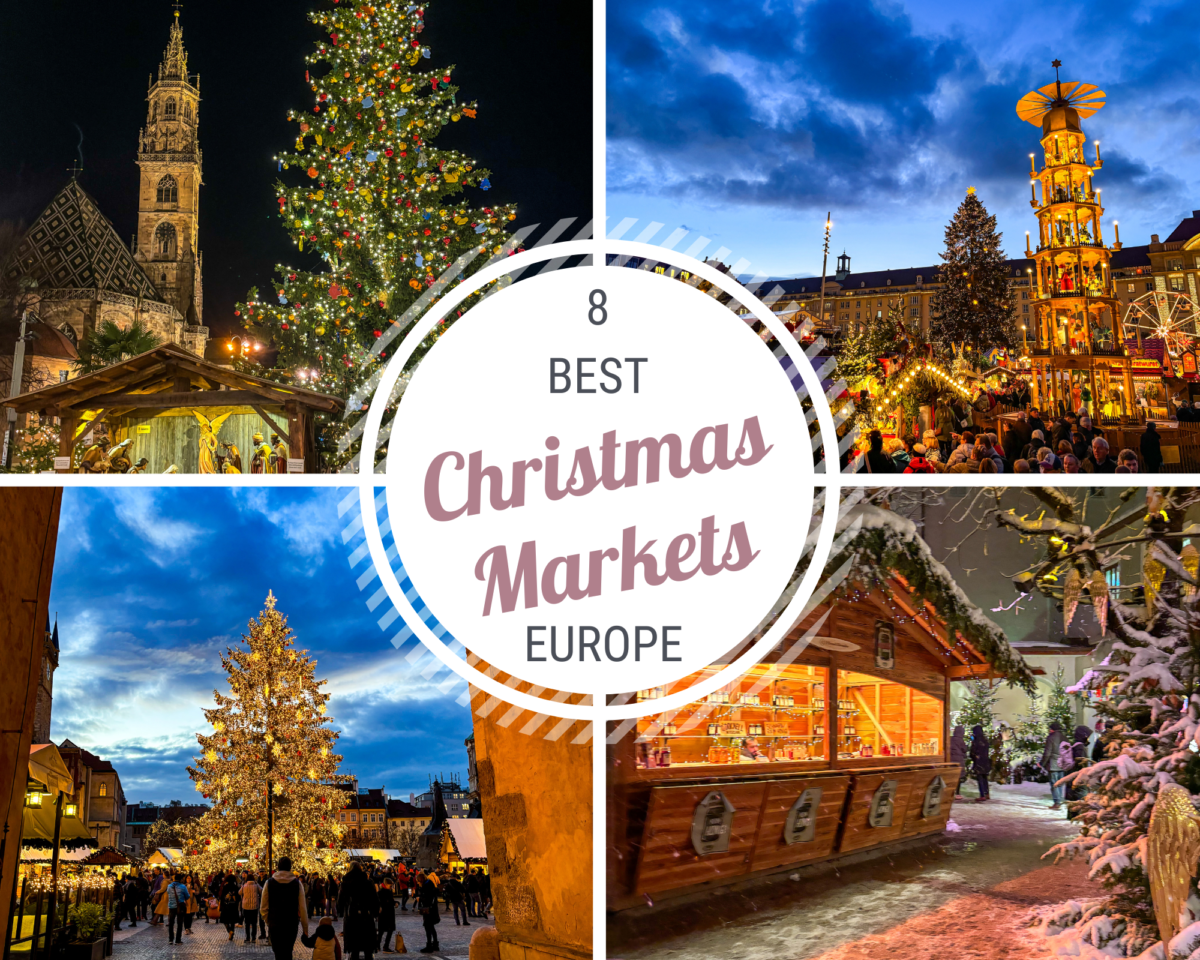
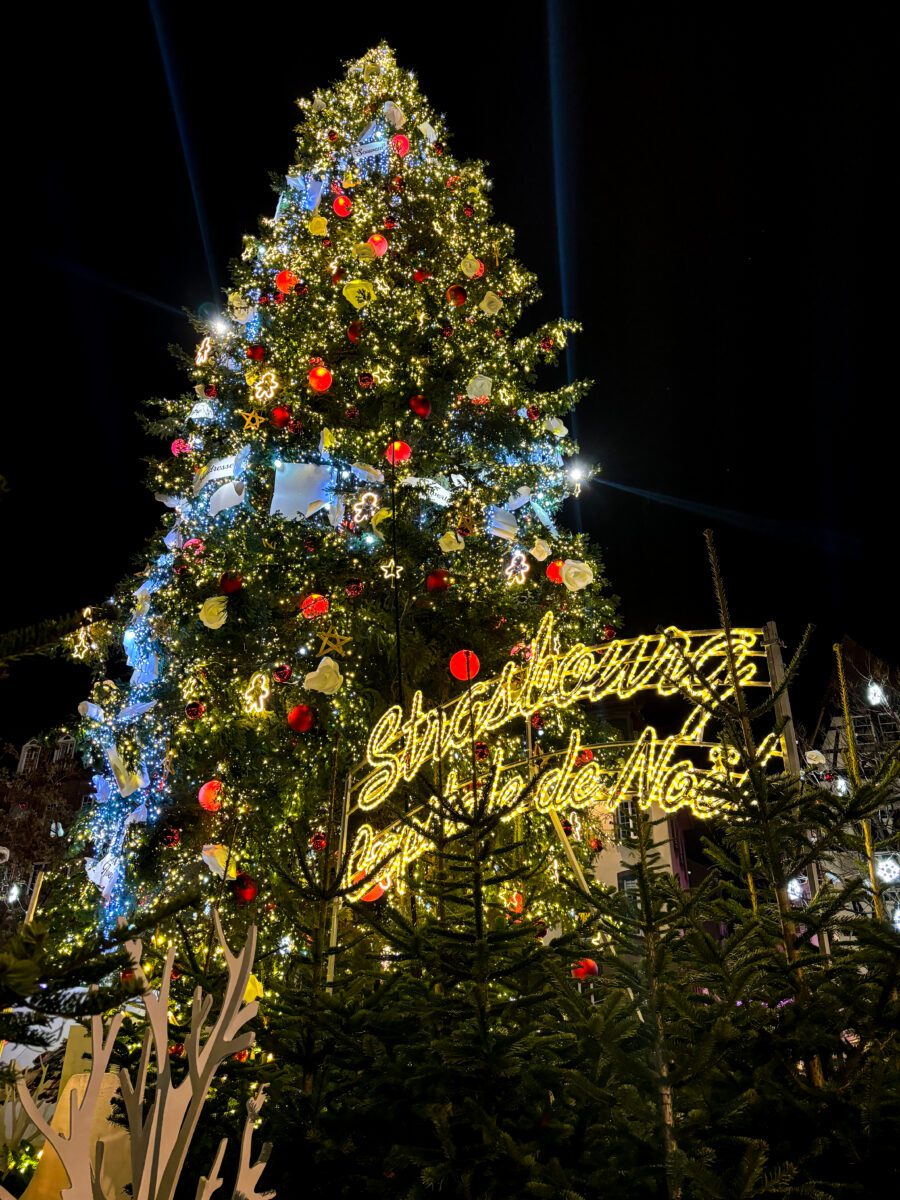
Alsace in December is genuinely special. Strasbourg has been hosting what it calls the world’s oldest Christmas market since 1570, and the entire region goes all out — every town, even the smallest, decorates heavily and sets up festive markets. Colmar’s markets in particular are worth the trip. It’s cold (average 2–5°C in December) and the most popular towns get very crowded on weekends, but the atmosphere is hard to match. See my full Alsace Christmas Market guide for everything you need to know.
How Long to Spend in Alsace
A minimum of 3 days gives you time to explore Strasbourg and Colmar properly. With 5 days you can add a few of the smaller wine villages (Riquewihr, Ribeauvillé, Eguisheim) and feel less rushed. 7 days lets you cover the full region at a relaxed pace — including Obernai, Kaysersberg, Haut-Koenigsbourg Castle, and potentially a day trip to Basel. I spent 5 nights in the region and felt like I had a good amount of time, though I could have easily filled more.
Alsace Safety for Solo Female Travelers
Yes — Alsace is a very safe region for solo female travelers. Both Strasbourg and Colmar have well-lit, walkable city centers with a visible tourist and local presence. Strasbourg in particular has a compact historic center where it’s easy to feel oriented and comfortable even late in the evening. Violent crime against visitors is rare throughout the region.
A few practical notes:
- Be aware of pickpockets in crowded tourist areas (Strasbourg’s cathedral square, Colmar’s Old Town on weekends) — the same standard precautions as any popular European destination apply.
- Strasbourg’s tram network is safe and runs late, but stick to well-lit stops and carriages with other passengers in the evenings.
- The smaller wine villages are extremely quiet and very safe — there’s essentially no concern there beyond keeping an eye on your belongings.
- I personally explored Strasbourg and Colmar alone at night without any issues — both are comfortable cities to navigate solo.
Alsace Map
Alsace sits in the far northeast of France along the German border, with Strasbourg in the north and Colmar at the heart of the wine route.